There are several things that might make the Christian faith unique, but one of the most distinct differences is in the relationship. When you go out into the world and start interacting with people from other faiths, it is difficult to find the kind of intimacy that is described in the New Testament. Personally, I believe that part of the reason for this is that religion is often a product of mankind’s goals and ideals and people creates things that will give them advantages over other people.
Most manmade religions want God distant and inaccessible to their fellow followers. This allows individuals in positions of power to be arbiters of faith between God and other people. This power structure allows an elite few to hold sway over the masses. Much of the criticisms leveled at religions and faiths are about the abuses allowed by these power structures. When people without God observe a religion where a leader has all the authority and often abuses it, we shouldn’t be surprised that they find that distasteful.
These false religions rely on certain assumptions that make it easier to manipulate others. They might say that people can never know if God is pleased with them or the only way they can know is if the leader tells them that they are okay. Some religions intentional keep their holy books unavailable to the masses, so that the average follower is not encouraged to read and understand the teachings for themselves. There are cults that make the spoken word of one individual leader the ultimate authority, which allows that person unlimited ability to abuse their followers. Other religions like to keep everything purposefully vague and impossible to understand, except for perhaps a few “enlightened” ones.
Contrast that with the truths of the Christian Bible, where instead of putting barriers between God and mankind, God chose to remove the barriers. John 1:14 (NLT) says, “So the Word became human and made his home among us. He was full of unfailing love and faithfulness. And we have seen his glory, the glory of the Father’s one and only Son.” Paul expands on this in his letter to the Philippian Church:
5 In your relationships with one another, have the same mindset as Christ Jesus: 6 Who, being in very nature God, did not consider equality with God something to be used to his own advantage; 7 rather, he made himself nothing by taking the very nature of a servant, being made in human likeness.
PHil 2:5-7 (NIV)
Jesus Christ lived and walked among the human race. He, being in very nature God, lived a human life. He was born a baby, grew up and lived a life among fallen humans and dealt with all of the challenges life in a fallen world brings. He was fully human, with the pain and discomfort that you would expect that to imply. Probably more than what you can imagine now, as the world he came into was actually much more uncomfortable than the one we currently live in. This tells us that as history moved forward, God didn’t make it harder for us to get to know Him, instead He made it easier. He didn’t put additional barriers between us and Him, instead, God made it possible to remove all barriers. Paul talks about this in Romans:
6 When we were utterly helpless, Christ came at just the right time and died for us sinners. 7 Now, most people would not be willing to die for an upright person, though someone might perhaps be willing to die for a person who is especially good. 8 But God showed his great love for us by sending Christ to die for us while we were still sinners. 9 And since we have been made right in God’s sight by the blood of Christ, he will certainly save us from God’s condemnation. 10 For since our friendship with God was restored by the death of his Son while we were still his enemies, we will certainly be saved through the life of his Son. 11 So now we can rejoice in our wonderful new relationship with God because our Lord Jesus Christ has made us friends of God.
Romans 5:6-11 (NLT)
In the Old Testament, Abraham is called a friend of God, but now we see that through the sacrifice of Christ’s death, we all can have a wonderful new relationship with God. We all are now able to be friends of God. That is really a staggering idea. God didn’t change. He is still holy. He is still perfect. He is still who He has always been, but now we are able to access Him as our friend. You and me are able to go to the Almighty, Most Powerful, Everlasting Father of the Universe and have intimacy with God.
This is a picture that does away with all of the incomplete pictures offered by man-made religions. We don’t need a priest, an imam or a guru to stand between us and God. Jesus Christ has made it possible for every person to approach Him as a friend. Right now, you should feel the freedom to talk to God personally and intimately, sharing your cares and concerns and very life with Him, just as you would with any dear friend. In fact, God is a better friend, the one who never breaks confidence, never fails you and never lets you down.
The Bible does make it clear that there are still roles for men and women to play in the Church and the Kingdom of God. God still appoints some to be “apostles, prophets, evangelists, pastors and teachers”. (Eph. 4:11) None of that takes away from the fact that anyone who accepts the message of salvation through Jesus Christ can become a friend of God, regardless of position, education, age or any other factor in their background. If you are a part of God’s Kingdom as His friend, you have all the capability to know God intimately and to see Him for who He really is.
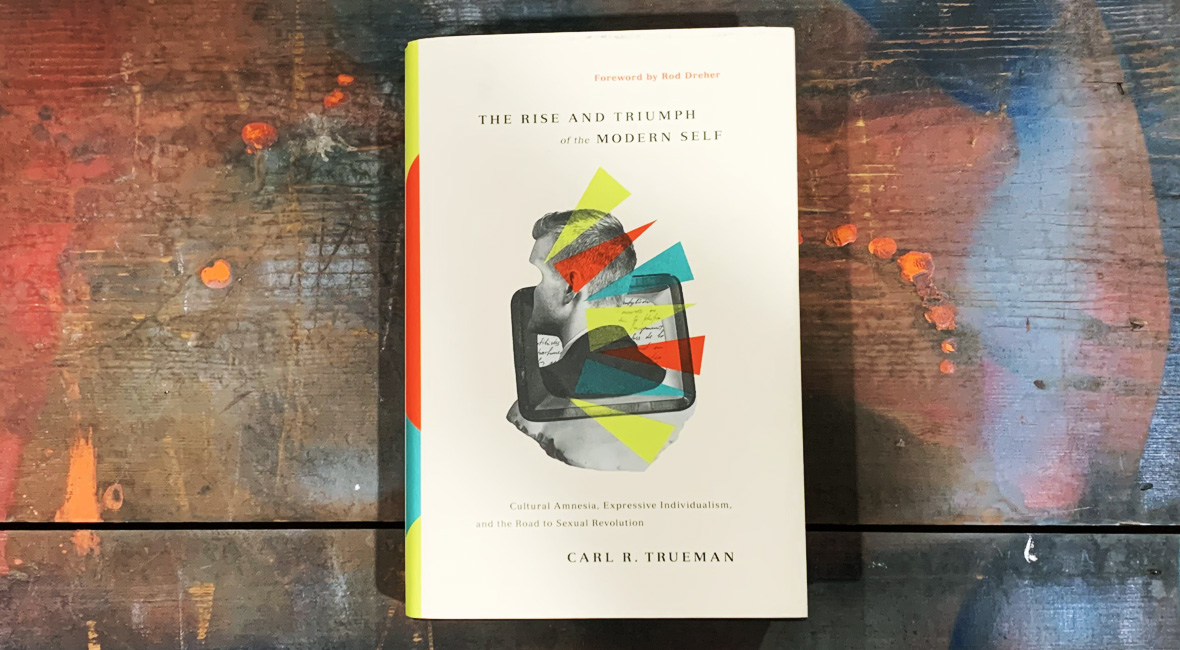
Dr. Carl Trueman’s book, which was released late last year, arrives at a particularly relevant time with the culture wars raging more every day. When Christians look around and see some of the trends in society, there is definitely a temptation to feel discouraged. In fact, I often hear Christians lamenting the state of society and expressing deep concern over the world they find themselves in.
This book is one of the most thorough examinations of the changes we see in society and the contributing factors that helped define our modern world. The subtitle of the book is “Cultural Amnesia, Expressive Individualism, and the Road to Sexual Revolution.” This hints at where the clues will be found as he searches back through history. The modern sexual revolution and especially the movement towards the current expression of transgenderism and LGBQT rights didn’t just happen in the last 60 years, but have their roots in many different influences.
“Every historical phenomenon is the result of a wide variety of factors that can vary from the technological to the political to the philosophical”
The author begins with an examination of philosophy and how some of the thoughts and ideology expressed by Philip Rieff, Charles Taylor and Alasdair MacIntyre contributed to the ideal of selfhood and social imagery, which are so common in our society today. This includes the disturbing trend we see today that moral truth is more of an expression of emotional preference than anything else. Some of these ideas were very influential in varying fields.
In the 18th and 19th centuries, we see a shift of focus to the inner life of the individual. He cites specific examples from literature of authors who saw society as oppressive and especially societal Christian norms such as lifelong, monogamous marriage. The viewpoints of men like Nietzsche and Marx were built on this and they, along with Charles Darwin, dismissed any significance that human life could have, especially in the spiritual domain. Nietzsche and Marx especially were influential in the modern view of history as oppression and victims as the true heroes of the world’s story.
From there, the author looks at the rise of the modern psychological study movement and specifically the work of Freud and Jung. This movement legitimized the pursuit of sexual desires in whatever form they might occur. Some Marxist thinkers, such as Reich and Marcuse would make use of this in their own political movements. All of this comes together to support the sexual revolution of the last 60 years. The prominence of which is expressed in a number of troubling ways, including the role of eroticism and pornography in addition to the push towards sexual freedom in lifestyle practice.
While this book is not an easy read for someone who doesn’t already have a background in the fields discussed, it is an important work for helping modern pastors, ministers and Christians understand more about the world they live in and the influences that shaped it. As a teaser to entice you to want to read the book, here are a few pull quotes to help you see some of the insights.
In a world in which the self is constructed psychologically and in which the therapeutic is the ethical ideal, we should therefore expect the notion of good and bad, to change accordingly…In such a context, freedom of speech becomes not so much part of the solution as part of the problem. Liberal democracies have long assumed that the free exchange of ideas in society is a means of preventing totalitarianism and promoting the common good. In the world of psychological man, however, it serves rather to give legal protection to (verbal) assaults on the person.
Thus, speech seen as violence will become the norm and society will start to restrict free speech more and more in order to defend individual freedom, especially sexual freedom. Individuals have the freedom to define “hate speech” according to their own definition of selfhood and tolerance in general is seen as more of a tool of an oppressive society, so censorship is seen as a greater moral good. The author gives examples of conflicts over free speech on university campuses where the students express their thinking in the following way:
…enemies are those who ‘devalue our experiences’. This is the language of subjective emotions, expressive individualism, and the therapeutic ideal that society has been cultivating. It also renders reason irrelevant until people are attuned to the proper emotions
If you have ever looked at some of these conflicts and found them to be incredulous, you are probably operating from a completely different worldview from the students making the complaints. In their reality, emotions trump reason.
For transgenderism to be coherent, the society in which it occurs needs to place a decisive priority on the psychological over the physical in determining identity. For it to be coherent also involves a correlative downplaying of external authority, whether that of the person’s biology or of traditional expectations.
Removing gender and traditional viewpoints and societal norms is a necessary step in accomplishing their goals and is a non-negotiable element in achieving the future that is desired by this movement.
…traditionalists only maintain their beliefs about sex and sexual mores on the grounds of irrational bigotry. In short, they are either stupid or immoral or both. In such a world, the idea that religious freedom is a social good is not simply increasingly implausible, it is also increasingly distasteful, disturbing, and undesirable.
Thus, Christians and especially Christians who hold to a Biblical worldview and practice evangelism, are the greatest enemies of the modern movement. They are the group, more than any other, that represents the opposite of their desired outcome. Thus, they will be attacked and assaulted more and more for those stances. The author sees this as the likely outcome in the near future and encourages the Christians reading to be ready.
So, what should Christians do in light of the information that is covered here? Dr. Trueman brings hope by pointing to the similarities of the 2nd century, when a fledgling Church had none of the advantages we are used to relying on and was openly hated and attacked by many in the places where it was found. This Church laid the foundation for a movement that would change the world and the author believes that the modern Church has the same options before them.
…she did it by what means? By existing as a close-knit, doctrinally bounded community that required her members to act consistently with their faith and to be good citizens of the earthly city as far as good citizenship was compatible with faithfulness to Christ
Followers of Jesus who faithfully held to His teachings and called on others to do the same did change the world in a time when all earthly momentum was against them. I for one find hope in this declaration and even though much of this book might point to very little to be encouraged about in the modern society, it is this absence of power that might cause us to turn to Him who holds the true power to make a difference. Dr. Trueman’s book is available here, and you can also read or listen to it as a member of Scribd, which is how I obtained it.
These are vivid words used to describe things that are not as they should be. Whether it is a relationship, a life or the world we live in, people often look around and find themselves feeling overwhelmed by the “wrongness” of it all. The last year has only added to this feeling. I’ve read several articles about how the world is “broken”. Instead of pinpointing one specific problem that is behind it all, instead there is an overall sense that things are so wrong they can’t easily be made right. This problem is bigger than bad circumstances that we find ourselves in, bigger than any one solution and beyond the scope of any leader to fix.
Cultural and racial issues are one area of the broken world that was especially prominent during the last year. Various activist groups expressed dissatisfaction and outrage at injustice that they saw both generally and illustrated in a few specific situations. People wanted things to change, to be better and to see an end to what was wrong, but it was difficult to find a clear, tangible solution that would fix what was broken in society. People saw injustices repeated over and over again and their frustration led to a variety of actions, some more helpful than others. Some of the more extreme responses created more brokenness and division, even between groups that agreed that something needed to change.
Political divisions created their own brokenness, often dividing families, communities and even churches. Political figures offered solutions to the things they saw that were wrong with this world, but these solutions were lacking. Some of them failed to address the real problems, some helped some people while hurting others, and some solutions were empty promises that the leader had no intention of fulfilling. All of this was augmented by a divisive media that seemed to celebrate the brokenness for their own ratings. The reporting was often intentionally inflammatory and it was fairly easy to find stories and reports that would blame the brokenness of the world on those who you personally don’t agree with.
All of this brokenness can lead us to a loss of hope. When we look around and see cracks everywhere, it is difficult to know where to start to make things better. Most solutions can seem like you are putting a band aid on a gushing wound or duct tape on a building that is falling down around you. When you see a broken world what does it mean and where do we turn for hope?
The Bible speaks clearly about the brokenness of our world. Instead of expecting to find a world that is whole, from the time of the Fall of man into sin, the world has been broken and continues to be broken. It describes the world as fallen, sinful and given over to the “flesh”. Here is some fleshing out of what that means in Galatians 5:
19 Now the works of the flesh are obvious: sexual immorality, moral impurity, promiscuity, idolatry, sorcery, hatreds, strife, jealousy, outbursts of anger, selfish ambitions, dissensions, factions, envy, drunkenness, carousing, and anything similar.
Galatians 5:19-21a (CSB)
The results of sin lead to the brokenness of the world we see around us. Sometimes what we see is not the result of one sin, but of generations of sin and sin patterns that pile brokenness upon brokenness. This is described in 2 Timothy 3:
But understand this, that in the last days there will come times of difficulty.For people will be lovers of self, lovers of money, proud, arrogant, abusive, disobedient to their parents, ungrateful, unholy,heartless, unappeasable, slanderous, without self-control, brutal, not loving good,treacherous, reckless, swollen with conceit, lovers of pleasure rather than lovers of God,having the appearance of godliness, but denying its power.
2 Timothy 3:1-5a (ESV)
Sin is the problem. Sin is what leaves us in a broken world. Sin is what destroys marriages, relationships, families and societies. When we see brokenness all around us, we are seeing what God promised as people followed the path of living for themselves without God. A broken world is the natural state of the world without God.
God’s solutions for this brokenness is not better governance, better programs, more money, money better spent or better ideas. Instead, God offered only one hope for all of mankind and that is complete life transformation through salvation in Jesus Christ.
For the wages of sin is death, but the free gift of God is eternal life in Christ Jesus our Lord.
Romans 6:23 (ESV)
You may be wondering about what difference can that really make in a society or in a nation? You might be surprised to learn that it can make a greater difference than any of the human solutions mentioned above or promised by politicians today. In fact, a sociologist named Robert Woodberry spent a great deal of time studying the impact of Protestant Missions on communities around the world. He was able to study “empirical, long term, statistically significant evidence that Christianity increased the general well-being of surrounding populations.”
While it is a popular theme to blame Christians for things like racism, division and hate crimes, the evidence Woodberry found showed that “When people selflessly live out the gospel, both through evangelization and through practical application, it changes cultures for the better.”
If you are interested in reading more, you can find a summary of his study here and the full study is available for download here.
As Christians, we should realize that when we look at the brokenness that exists in the world today, there is only one true answer for what ails it, and we have access to that solution. You can be a part of healing brokenness around you, but you have to be willing to go to those who need to know the love of Christ and share the hope of His salvation with this broken world. You and your ideas and opinions are not the answer. Jesus is the answer. What are you waiting for?
In the country, not far from where you grew up, there was a very troubled family. This family had a mom and a dad, a brother and a sister. The sister was just a little over a year older than the brother and from the day they were both able to walk, they had been at odds with each other. What made them unique was that everyone agreed that in every area other than when it came to each other, they were model children. They were helpful to their parents and anyone else they came in contact with, even looking for ways to help without being asked. As long as they were separate from one another, you would have never guessed that there was a problem of any kind.
The parents had tried everything to get them to work out their differences, but no matter what, if the sister had one opinion, the brother must have the opposite, and vice versa. Even when it came to simple things like what to eat or wear, if one of them expressed an opinion, the other would be sure to disagree.
These disagreements weren’t just a polite contradiction. Every conflict was full out war. The siblings not only didn’t agree, but they basically demanded compliance with their opinion. There were few rational arguments between them, instead their conflicts were marked by yelling, name calling and often physical altercations as well. From the time they were just a few years old, on into their teenage years, every battle didn’t end until they were physically separated from one another.
Soon, the parents developed an elaborate household system that was designed to keep them permanently separated. They divided the house into zones and each sibling was assigned times that they could be in each zone. During the few times the brother and sister were together, the parents forbid them from speaking to one another. But they still sometimes found ways to be in conflict, even if it was just from a glance in the wrong direction.
After a brief experiment with school that ended with the parents getting called in every day, the brother and sister were home schooled and only allowed to go out into the community on alternate days. As you can imagine, it wasn’t just the parents who tried to solve this problem, but family members, school counselors and medical professionals were brought in to talk to them as well. Most of them had the same experience, whenever they were by themselves, they seemed perfectly rational, calm and compliant with the desires of the person trying to help, but as soon as they were together again, the ruckus started.
Finally, the parents had reached their limit. Even though the children were only 15 and 14 respectively, they knew they couldn’t continue to live in the same house, one of the children would have to go someplace else. But how would they choose? Despite all the trouble, the parents loved these siblings and they really were good kids as long as they could be kept apart. It seemed that the only answer was permanent separation.
They talked to the daughter first, her being the oldest, and she calmly made her case for why her brother had to go. In her mind, he was the problem. She was right and he was the one who insisted on living a lie and holding to positions that couldn’t possibly be true. He was so unreasonable, surely her parents could tell that the obvious solution was to find another place for her brother. Having him in the house was like having an agent of chaos, who just wanted to tear all reason and truth apart. There would never be peace in the house as long as someone who refused to acknowledge the truth was living there.
When it came time to talk to the boy, the conversation was very similar, but he pointed to his sister’s harsh, uncaring nature. She was a cruel person, who had always hated him. He suspected that she had a natural bias against little brothers that made her target him for unfair treatment. It only made sense that because she was the oldest and the source of the problem that she must be the one to go. There would never be peace in the house as long as someone so heartless was living there.
In the end, the parents couldn’t choose. They decided that the dad would take his daughter away and the son would stay with his mom. That way at least each child would have one parent. They would arrange for the other parent to be able to visit occassionally, but the strife between the children had finally ended their home.
Both of the children didn’t like this plan. They couldn’t understand how their parents didn’t see clearly that the other one was obviously the problem. But both of them, unwilling to compromise even a bit, wouldn’t agree to change in order to save their family. Instead, the story ends with a family divided, perhaps forever.
Unfortunately, this kind of division is becoming more and more common in families, communities, churches and workplaces. As a society, we are “birthing” children who are unwilling to come to any type of middle ground where mutual understanding might be found. We are modeling division and all discourse is becoming charged with a severe dislike and disrespect for anyone who does not agree with our opinions. Instead of engaging and talking through ideas, we are obsessed with labeling our opponents with sub-human categories that demean them personally while “destroying” their arguments. We make everyone the “Other”, an enemy that we cannot empathize with.
Just like the two siblings, the path we are on is one that none of us will enjoy in the end. We are headed to a place of desolation. A “broken” place that cannot be repaired by any government or leader. The reality is there is little hope for us to turn away from this path on our own. Just as all of our efforts to save ourselves end in failure, the only real hope for true reconciliation is in Christ.
When we read a human story like the one above, we want a solution. We don’t mind the conflict and the drama if in the end we know everything will work out. But we are fooling ourselves if we think that any human leader has a path out of this. Only Christ can put hostility to death. The way forward is up to each of us. Will we turn away from human solutions and start putting our hope in God-sized answers or will we continue to live daily immersed in strife and enmity?
“…and you will know the truth, and the truth will set you free.”
John 8:32 ESV
This is one of the most well know verses in the Bible. It has been quoted by Pastors, Politicians and other orators whenever they believed it would serve the purposes of their speech. Many times, it is quoted completely out of context and sometimes it is used overtly as a weapon to advance a particular agenda. The integrity of the usage is tied up in the “truth” the individual is proclaiming will set you free. We live in a world where truth is under fire. Some are attempting to redefine truth at the atomic level. Long standing accepted norms are being deconstructed and the personal interpretation of reality is encouraged. Individuals are blessed to create their own truth and sometimes it seems that the only true sin in the modern world is to declare absolute truth that claims something else is false.
Last May, I talked about this verse in the context of integrity. You might say, I used this verse for my own purposes in that article. That article was centered on our own usage of truth. I wanted to emphasize the importance of Christians considering the truth of information before they passed it along to a public audience. This is a great challenge in this world today and fact checking the fact checkers can take a great deal of time with the expansion of severe bias into most information sources. Today I want to talk about something that is more central to the main idea of this verse, the freeing nature of truth.
Freedom is something that is often taken for granted by those who live in it. When you experience freedom every day, it is easy not to think of it. The opposites of freedom are words like: captivity, bondage, slavery and subjection. Most of us would never define our lives by words like those. While there are and have been places where it was common for people to live under those circumstances, few of us have experienced something like that first hand. The fight against human slavery even unites people from diverse backgrounds in our modern world.
Even though it is not the equivalent of physical bondage or slavery, the absence of truth in people’s lives has its own way of holding people in a state of captivity. This year especially seems to have emphasized the difficulty people have as they try to understand what information they could trust regarding politics and current events. Polarized viewpoints are often presented with extreme bias as undeniable truth. On both the news and social media, people are able to find perspectives that perfectly align and reinforce their own opinions and can share them in their own echo chambers. Differing viewpoints are attacked and treated harshly and most people seem to rush to find “evidence” that supports their own side rather than an honest inquiry into the truth behind the issue.
All of this tends to build a cage that is difficult to escape. We become more and more dependent on untrustworthy advocates of “truth” that are more motivated by their own profits or political agenda than they are by any journalistic integrity that once existed. As followers of Christ, this is a definite problem. We were made for truth. Our hearts and minds hunger for it. We want to stand up to injustice. We desire to be on the cause of righteousness. Truth is truly freeing when we experience it. Many of the founders and most significant contributors to our scientific understanding of the world we live in were driven by this hunger to know the truth. We should all care about the truth, but where can we be sure to find it?
Let’s return to the beginning to expand the context of this verse, this time with John 8:31-32 in the Amplified version:
31 So Jesus was saying to the Jews who had believed Him, “If you abide in My word [continually obeying My teachings and living in accordance with them, then] you are truly My disciples. 32 And you will know the truth [regarding salvation], and the truth will set you free [from the penalty of sin].”
Jesus teaching to the disciples was about freedom in 2 main areas:
Freedom from sin and the penalty of sin through salvation in Christ
Freedom through Godly living found in knowing and following the teachings of Christ (the Bible)
The core of our search for truth must start there and that must be the foundation of truth in our lives. The devil is a liar and this world is the devil’s playground. We will find few guarantees of truth in the things we experience in this world. On the other hand God is truth and He has conveyed truth to us through His word. As we immerse ourselves in that truth, we experience freedom in our daily life. When our thoughts are centered on uncertain truth through reading the news and social media, we tend towards being bound to those things in our thinking. Our minds will keep coming back to the lies and half-truths we find there and they will consume our mental and emotional energy. This is how we become slaves to the world.
On the contrast, when we center our lives on truth, we experience the freedom to carry out the commands of Christ in the context we find ourselves in. Interacting with people in person and online, regardless of their political viewpoints, becomes about who they are as a creation of God, rather than what “tribes” they align themselves with in the culture wars. When a crisis comes before us, we can concern ourselves with the tragedy of the human impact rather than the take of our political alliance. Truth is found in God’s perspective on the world. We see real people, real needs and know the real solution (Christ).
Don’t start or end your day on social media or by reading the news. Start it by reading, studying or meditating on the truth. End your day with loved ones or reading a good book, preferably non-fiction.
When you do go on social media, don’t have an agenda or fall into the trap of picking a fight with someone who is looking for one. If you see an inflammatory post and don’t have the time to thoroughly research it for yourself, just hide it from your feed and move on.
If you have issues you care about passionately, make it a goal to learn as much as you can from people as close to the source as possible. Don’t rely on lazy reporting from understaffed news agencies with their own agenda, posts on social media, and especially memes. I recommend local news sources. Learn to get to know God’s perspective on these issues. God is just and the Bible has a lot to say about many issues.
Remember that the foundational truth is that there are no human solutions for the greatest problem you or anyone else has to deal with, standing condemned before God for their own sins and unrighteousness. The essential truth that everyone needs to hear is that Jesus is the only solution for this problem, and until a person puts their hope and trust in Him and receives His salvation, all other truths and problems are of little importance.
If you want to know more about what it means to know God and His truth, I wrote a whole book about it, which is available here.
Friendship has always had different levels of meaning. My wife has made fun of me throughout our marriage for defining many different friends as a “good friend” or one of my “best friends”. Part of this comes from my more extroverted personality. She, like most good introverts, treats terms like these as precious and rarely bestows them on a few choice people. Today, the term has less meaning than ever. The decisions by various social media platforms to use the term “friend” has likely contributed to this. Facebook is the most well-known playground for this type of being a friend.
Friend in this context can now mean any of the following: friend, family member, acquaintance, business associate, people who go to the same church/school/group that I go to, people I think I met once, friends of friends that seem interesting, people who like the same things I like, and even pets that are cute/interesting. That is a pretty diverse list and I’m sure I missed something. If all of these people are now our friends, what does it even mean to be a friend? (Proverbs 12:26) Here are a few principles I want to share that I hope will help you better assess what it means to be a friend on social media and how we should treat one another.
Friends don’t discuss in public what is better talked about in private or not spoken of at all. On social media, it is easy to have both public and private discussions. This is a big change from the way community was structured in previous times. Private discussions have always been possible, but in the past, few people had access to a broad public forum to talk about things. Social media has provided a platform for people to bring things into the public discussion which would never have been possible in the past. If something only concerns us personally, we can make the choice about when to publicly discuss it on our own, but if it involves our family, friends or others in our community, we have no right to discuss private issues in a public forum without their permission. If you don’t feel comfortable talking to them about it privately, you definitely shouldn’t discuss it publicly. (Romans 12:10)
Friends are not responsible for changing their friends minds about everything. There is an issue that I’m sure you are right on. You have the whole truth and are an evangelist for this position. That doesn’t mean you personally have to beat your friends over the head with this position until you have battered them into submission. This is not only a good way to lose a friend, but human nature has shown us that it is not an effective way to change people’s mind. These kind of assaults tend to cause people to respond in kind, put their armor on or walk away. Friendly discussions about issues are great, but when someone indicates that they have a different perspective, the weight of convincing them otherwise is not your responsibility as a friend. (Proverbs 19:20)
Friends don’t attack friends personally when talking about an issue. A public forum is the perfect place to share ideas and to have a give and take about the content of the ideas. This is a tradition that dates back throughout all of human discourse. Offering counterpoints and noting the flaws with ideas is not a problem, but this should never degenerate into personal attacks. Personal attacks and name calling not only demonstrate that you don’t really consider the person a friend, but they often also show that you don’t have an intelligent response to offer. Friends should conduct their conversations on posts in a way that the person you are engaging with will never question your friendship. (Proverbs 18:24)
Friends don’t talk about other friends behind their back. An oldy, but a goody. Gossip spreads even faster in the digital age and a true friend does not engage in gossip in either a public or private forum. If you hear something about a friend that is concerning, you can pray for them, talk to them about it directly, or choose to ignore it. You are not free to run to other friends and start talking about it or even share it as a prayer request with other friends without the person’s permission. (Proverbs 16:28, 17:9)
Friends see their friends as more than their position on one issue. People are complex and to label and write people off for one issue that you disagree with them on is not true friendship. We used to live in a world where most people’s views and opinions were held in private. That is no longer true for many. Social media has given people the opportunity to express these things without restraint. If you choose to call someone friend and they express an opinion that you disagree with, you should practice empathy first and give them the benefit of the doubt. Think about what would lead them or even yourself to hold a similar view. Value their friendship by making sure they are fully heard. If necessary, engage them in loving, honest debate to learn more and share your difference of opinion in a way that doesn’t belittle or demean them. (Proverbs 27:9)
When your friend has a legitimate problem, online is not the answer. Some problems are very real and very serious and require you to stand up and try to help in whatever way possible. This is difficult to do well from a distance, online or in a public forum. It requires personal connection. If you care enough to call someone your friend, care enough to engage with them personally either face to face in person, or on a video call. Pray for them above all else. God solves problems, man is incapable of solving. (Ecclesiastes 4:10, Proverbs 27:5-6)
I may add to this list later, but I think this is enough for now. Maybe after looking at this list, you realize that you have many online friends who are not really your friends. They are people you don’t care enough about to treat them in the way a real friend should. If that is the case, you are probably better off removing them from your friends’ list altogether. It is also possible that in reading through this list, you have realized that you have been a really bad friend to someone who could probably use a good friend. Going to them, apologizing and moving forward is a great way to deepen a friendship. A true friend will forgive you as they should. (Colossians 3:13)
Like most things these days, views of America seem to be very polarized. President Trump ran on a platform that pushed for “Make America Great Again”. This was mostly a call to a return to what has been called “American exceptionalism”, a belief in the “manifest destiny” that some saw as a God ordained right for America and Americans to excel in all areas. Part of the success of this siren call was that it was obvious to anyone looking around that America, by many objective standards, had fallen away from being exceptional or “great” in the vernacular of the day. For at least 2 generations, rather than emphasize the amazing accomplishments of those who helped create America, the tendency in our institutions of higher learning (and ever more in all public education) has been to focus on the flaws and sins of those who were responsible for the nation, it’s founding and it’s constitution.
In the Prologue to this book, Mr. Taunton quotes former NFL quarterback, Colin Kaepernick, “How can you stand for the national anthem of a nation that preaches and propagates freedom and justice for all, that’s so unjust to the people living there?” Kaepernick is representative of many from the current privileged generation, which have enjoyed many of the benefits of the sacrifices of those who have come before them, but who still look around and find the flaws that still exist in society unacceptable. When his own personal and professional struggles surfaced, Colin found solace in the arms of Nessa Diab, a Muslim-American activist who is a child of Egyptian immigrants. Under the influence of her and others, Colin became radicalized and soon was the center piece of movement that spoke out against the injustices that still exists in modern America.
Mr. Taunton highlights Mr. Kaepernick’s story as an illustration for the purpose of the book. He finds that America is on trial and one side “sees America’s wealth, power, and influence as an accident of history” and the other side sees “America’s exceptionalism that is anchored in a Judeo-Christian heritage that has given rise to her laws, art, literature, culture, and place in the world as a refuge from just the types of governments the left idealizes.” There is an ongoing struggle every day between these two ideals contested in a variety of arenas. The conflict of these visions is “tearing our country apart.” All of this led Mr. Taunton to wonder, doesn’t the perspective that there are so many things wrong in America “presuppose there are better places in the world to live”?
In this book, Mr. Taunton sets out to answer that question. If the many people who had promised to move to another country to flee the problems and oppression of America had actually left, where would they go? Over the course of about 3 months, the author travels to 26 different countries around the world and seeks to evaluate each of these countries by the same standards those who are critical of America would use of the US. The big question is simple, if America isn’t great, is there actually a better alternative out there, especially for Americans?
Along the way, Mr. Taunton also would like to answer several pressing questions:
Is America’s prosperity merely an accident of history and a result of the exploitation of the weak, or are some cultures superior to others by virtue of their religion and poltical philosophy?
Do reasonable people around the world hate America or are they unsettled by our current identity crisis?
Is Europe’s open borders policy bringing cultural enrichment we should model, or is it laying the foundation for the gradual overthrow of Western culture as we know it?
Is America exceptional in ways that matter and should she remain so, or should America—the holdout in the West against globalism, militant secularism, and climate change panic—tap out and become a socialist democracy like those of Europe?
“At the end of our journey, we will have discovered one of two things: The Left is right and America isn’t so great after all, or we will see she remains, as Abraham Lincoln put it, ‘the last best hope of earth.’”
With that premise in mind, I’m not going to spoil the ending by answering any of these questions in this review, but will say that the author does a fair job of evaluating the serious contenders. Some countries are found to be excellent for those who were born there and who are acclimated to that country’s cultural quirks. Other contenders put on a beautiful façade for tourists, but are greatly lacking for the majority of the citizens. Serious contenders are carefully evaluated such as Singapore, New Zealand, Australia, South Korea, Japan, Britain, Norway, Sweden, Switzerland and Germany. The combination of the author’s understanding of world history combined with the first hand experiences of this trip provide an entertaining and informative journey.
Mr. Taunton has asked several questions that are very worth asking. Whether you are on the right or the left, the majority of us have not taken the time to carefully consider what it is we are voting for or asking others to vote for at the level presented in this book. By looking at the world with the same critical eye, it gives us a much more capable ability to give our own country an honest appraisal. If you are the type to either boast of America’s greatness or great history or the kind of person who is ready to tear it all down and start over, you would greatly benefit from taking this journey with the author.
Dreams are funny things, filled with unclear images and memories. Sometimes the dreams we have are influenced by the last thing we saw or read before we laid our head on the pillow. Some people claim that their dreams are very different depending on what they eat. For me, my dreams can be impacted most by what is dominating my thoughts in the waking hours.
I have day dreams that are more like fantasies. These are the dreams of conscious thought, over which we have some degree of control. In our day dreams, we can grant ourselves our heart’s desire. Sometimes these dreams are shared. One of the most famous speeches of our times begins, “I have a dream…” A dream like this shared can have a powerful impact. For most of us, they are just simple thoughts of a future we envision.
Unfortunately, most peoples day dreams don’t become a reality. They imagine a reality that can’t come to pass for various reasons. Maybe it is their own poor decisions, shooting themselves in the foot. The dream could be destroyed by the choices of others or by what is universally deemed, “bad luck”. For the majority of people, they will experience something different in the future than what they imagined. People’s lives are often defined more by their response when their dreams don’t come true as they are by the dreams they held in the first place.
I suspect many people over the course of the last year have had the experience of seeing their dreams derailed, or perhaps shattered all together. I know that my 2020 began with very different dreams for the future than I currently possess. So, what do we do when our dreams don’t or can’t come to pass? If we look at how people responded over the last year, we see many unhealthy choices. Depression is common and people turn to substance abuses, reality-escaping endeavours and most tragically, suicide.
This suggests that dreams dashed can become nightmares for many. When people find their expectations unfulfilled it seems clear that they don’t have healthy tools to process their disappointment. As a Christian, I find my hope in these circumstances in God. We have the grace to start over and find our strength in Christ. Just being a Christian doesn’t guarantee someone is fully prepped for the end of a dream. Both believers and non-believers can struggle during these times.
Two weeks ago, I wrote an article about the opportunity to “Begin again, again“. In Christ, we are not expected to be perfect, but to be forgiven in Christ for our mistakes and sins. We pursue Him with a whole-hearted devotion and when we screw up, we can trust in His love and grace providing the forgiveness we need.
If you are someone struggling with broken dreams, there are people who want to know about those struggles. As someone who studied counseling, I know about the special calling of people who want to help in circumstances like these. When our dreams get dashed we need to:
Stop and breath, don’t panic
Talk to a friend or family member or get help from a professional
Take time to remember the good that has come before
Remember that the God of the universe declared the following for people just like you
17 The righteous cry out, and the LORD hears them; he delivers them from all their troubles. 18 The LORD is close to the brokenhearted and saves those who are crushed in spirit.
Psalm 34:17-18 (NIV)
Today, at the beginning of 2021, I have very different dreams than I had at the start of 2020. That isn’t necessarily a bad thing. Life changes, we change and our dreams change. That is a normal part of this existence. If you can’t find the hope today that doesn’t mean there won’t be hope tomorrow. If you haven’t yet placed your hope in Jesus Christ, He is truly the God of the brokenhearted and the one who saves those who are crushed in Spirit. The Bible tells us how that salvation may be found.
If you openly declare that Jesus is Lord and believe in your heart that God raised him from the dead, you will be saved.
Dr. Peter Jones’ book, The Other Worldview: Exposing Christianity’s Greatest Threat, is aptly titled. Christians around the world have no difficulty recognizing that something is wrong in the world and identifying that there seems to be a shift away from Christianity and its values, but it is often very difficult to narrow down what are the real issues causing this shift. In this landmark title, Dr. Jones is able to show the history and evolution of the thought that is creating these shifts in society.
The secular humanism of a generation ago has evolved into something much more dangerous. Dr. Jones identifies 5 areas in which the “traditional plausibility structures that gave life meaning and significance under Christian influence” have become unrecognizable in the greater culture:
Morality is relativized by varied (and often contradictory) personal and social convictions
Honesty means being true to one’s inner commitments and longings more than to external expectations or objective facts
Acceptable models of sexuality and family allow various combinations of persons and genders
Marriage is often functionally indistinguishable from mutually convenient cohabitation
Motherhood is celebrated in the same breath as abortion on demand
Society is not homogenous and it is rare to find a society in which everyone lives in lockstep in agreement to a set of rules, but it is common for a society to have an agreed upon set of rules or standards, and that is what many westerners have assumed about their societies. The author quotes Peter Berger, who called it the “‘sacred canopy’ of basic Christian worldview, so that the fundamental ideas-about God, morality, sexuality, family, marriage, motherhood, spirituality, and religion-were understood from a Christian perspective, consciously or unconsciously.” As someone who has lived in a society that holds to a very different “sacred canopy”, I can attest to both the commonality of those standards in my society and the shifts that have occurred in the 20 years I’ve lived mostly outside of the US.
As a Christian, Dr. Jones desires to hold up what he is seeing in society and evaluate it according to that understanding. As such, he finds “two worldviews-one based on the ultimacy of creation, and the other based on the ultimate, prior, and all-determining existence of the Creator.” He calls these 2 worldviews Oneism and Twoism and defines them as following in more detail:
“Oneism sees the world as self-creating (or perpetually existing) and self-explanatory. Everything is made up of the same stuff, whether matter, spirit, or mixture. There’s one kind of existence, which, in one way or another, we worship as divine (or of ultimate importance), even if that means worshipping ourselves…This is ‘homocosmology,’ a worldview of sameness. The classic term of this is ‘paganism,’ worship of nature.”
“The only other option is a world that is the free work of a personal, transcendent God, who creates ex nihilo(from nothing). In creating, God was not constrained by or dependent on any preexisting conditions. There is nothing exactly like this in our human experience of creating; our creative acts are analogous with God’s. There is God, and there is everything that is not-God-everything created and sustained by the Father, Son and Holy Spirit. This worldview celebrates otherness, distinctiveness. We only worship as divine the distinct, personal, triune Creator, who placed essential distinctions within the creation. This is ‘heterocosmology,’ a worldview based on otherness and difference. This is often called ‘theism.'”
The author takes most of the book to talk about the history of Oneism and to point to what has contributed to its most dominate form in the modern age, such as humanism, Jungism, the sexual revolution and postmodernism. This provides a helpful framework for the reader to understand the viewpoints of many of those acting so differently in society than is considered normal or rational for someone who holds to a more traditional sacred canopy. The author describes how for many their worldview is as much a belief system as what is found in some of the more traditional forms of religion. People have strong, passionate beliefs that are based more on faith than reason, but have nothing to do with a belief in God. These are often centered around social and environmental issues.
In addition to examples of Oneism found in a more secular framework, Dr. Jones also visits some of the more “religious” forms found in the US, which can make use of the terminology of traditional Christianity, but abandons the orthodox theology. These forms can turn the focus on man-made ideals such as prosperity, nationalism or mindfulness. This path doesn’t lead toward a true relationship with God any more than Carl Jung’s teaching did.
The author ends by reminding the readers the Pagan society that Christianity was born into. Paul traveled throughout the Roman Empire and was in the minority wherever he went. The ancestors of modern Oneism can be found in the societies that he engaged. Gnosticism had many similarities with the thought we see today. Dr. Jones implores the readers to not give up, but seek wisdom as they refuse to withdraw from society, but follow the Biblical commands to engage with those who hold a different worldview than our own. I highly recommend this book for any Christian leader or any Christian who desires to follow this path towards engagement. Dr. Jones’ book should be in the library of every pastor and college minister and would be a very helpful resource in training up new ministers for today and tomorrow.
Today marks the new year and I’m sure many people have either formally or informally begun making themselves promises about what will be different in the new year. We are forever starting out on paths to a new life or a new us that meet with the inevitable detour. I grew up with family and friends who talked about New Year’s Resolutions pretty regularly. Every year, people would begin the year talking about regular exercise, new diets and quitting bad habits. The one thing all of these resolutions had in common was that they were all inevitably broken. But that does little to discourage us from trying again the next year.
“Hope Smiles from the threshold of the year to come, Whispering ‘it will be happier’…”
So, is this a bad thing, should we shun New Year’s Resolutions that are made, only to be broken? G.K. Chesterton had this to say about the topic:
“The object of a New Year is not that we should have a new year. It is that we should have a new soul and a new nose; new feet, a new backbone, new ears, and new eyes. Unless a particular man made New Year resolutions, he would make no resolutions. Unless a man starts afresh about things, he will certainly do nothing effective.”
G.K. Chesterton
I actually think it is very normal for a follower of Christ to continually resolve to be more than they are. As Chesterton said, to start “afresh about things”. We were made to try and try again. This is the hunger for the Kingdom that exists in the heart of every believer. We live as those who experience the salvation of Christ, but sin still exists in the world. In Scripture we find Biblical themes that talk about the good of resolving to be better and trying again.
Well then, should we keep on sinning so that God can show us more and more of his wonderful grace? 2 Of course not! Since we have died to sin, how can we continue to live in it? 3 Or have you forgotten that when we were joined with Christ Jesus in baptism, we joined him in his death? 4 For we died and were buried with Christ by baptism. And just as Christ was raised from the dead by the glorious power of the Father, now we also may live new lives. 5 Since we have been united with him in his death, we will also be raised to life as he was. 6 We know that our old sinful selves were crucified with Christ so that sin might lose its power in our lives. We are no longer slaves to sin. 7 For when we died with Christ we were set free from the power of sin. 8 And since we died with Christ, we know we will also live with him. 9 We are sure of this because Christ was raised from the dead, and he will never die again. Death no longer has any power over him. 10 When he died, he died once to break the power of sin. But now that he lives, he lives for the glory of God. 11 So you also should consider yourselves to be dead to the power of sin and alive to God through Christ Jesus. 12 Do not let sin control the way you live; do not give in to sinful desires. 13 Do not let any part of your body become an instrument of evil to serve sin. Instead, give yourselves completely to God, for you were dead, but now you have new life. So use your whole body as an instrument to do what is right for the glory of God. 14 Sin is no longer your master, for you no longer live under the requirements of the law. Instead, you live under the freedom of God’s grace.
Romans 6:1-14 NLT
There are lots of thoughts about our old life versus the life we live in Christ, but what I read more strongly than anything else is the life that is in it. We are to live, not just lock ourselves away as people bound up by the sin that controlled our lives before. This is the picture of the grace we have in Christ. It gives us freedom to live, knowing we will sometimes fail, but will rise up free to live again. One person described it like living on the trapeze.
Watching a trapeze show is breathtaking. We wonder at the dexterity and timing. We gasp at near-misses. In most cases, there is a net underneath. When they fall, they jump up and bounce back to the trapeze. In Christ, we live on the trapeze. The whole world should be able to watch and say, “Look how they live, how they love one another. Look how well the husbands treat their wives. And aren’t they the best workers in the factories and offices, the best neighbors, the best students?” That is to live on the trapeze, being a show to the world. What happens when we slip? The net is surely there. The blood of our Lord, Jesus Christ, has provided forgiveness for ALL our trespasses. Both the net and the ability to stay on the trapeze are works of God’s grace. Of course, we cannot be continually sleeping on the net., If that is the case, I doubt whether that person is a trapezist.
What kind of life would that be if we simply slept on the net. We will fall, the Grace is there and sufficient to catch us when we fall, but we don’t fall to lay back on the net and go to sleep. We fall, so we can climb back up and live again! The Christian life should look like a historical chart of the stock market’s performance. Lots of dips, but an overall upward movement.
So, when it comes to New Year’s Resolutions, it isn’t the making of them that is the problem, but I think the real problem comes in the waiting until the New Year to make them. For example, if you resolve to be a better spiritual leader of your family and find yourself in February back in the lazy routine of life having failed in your endeavor, that isn’t a problem unless you give up and say, I’ll do better next year.
Instead, we should be ready to pick ourselves up from the state we find ourselves in and resolve to start again as soon as we realize that we aren’t where we should be.
So, why don’t we do this? Why do we continue to stay derailed from the path that we ourselves said we wanted to be on? Here are five common reasons from The Screwtape Letters on a section titled, “How to attack faith” As a reminder, these are written from the perspective of a greater demon writing to a lesser demon, so their enemy is God and Jesus.
Here’s what I recommend —
Don’t let him open the Enemy’s book. Have him think he’s not feeling spiritual enough. Suggest that it’s too complicated. Tell him he’s too tired. Be vigilant — five minutes of prayerful reading can set him back months (Rom 10:17).
If his faith is strong, don’t panic. Have him notice how strong his faith is. Then have him congratulate himself on how his faith is stronger than his wife’s, or his friend’s. Before you know it, his faith will no longer be in the Enemy, but in the pleasures of feeling superior.
If you do manage to weaken his faith, don’t let up. Remember, all he has to do is cry to the Enemy for help, and all your hard work will be lost (Mark 9:24). But be subtle. One of my favorites is to make them think they need stronger faith BEFORE they can cry out to the Enemy (when the only way they can have stronger faith is BY crying out to the Enemy — sometimes I am astonished at my brilliance!).
Keep him from others who belong to the Enemy. Don’t try to have him say “no” to fellowship. Instead, have him say “yes” to everything else. And when the Enemy stirs his heart about being part of a church community, whisper that he can get more involved “as soon as his schedule opens up” (and make sure that never happens).
If he does get time with believers — don’t panic. Work with our fellow demons to keep the conversation shallow. Whisper to him that he’s the only one with weak faith, and that if he says something — he’ll feel out of place. Don’t let any of them ask how he is doing. And especially don’t let any of them pray for him (that’s how I lost Peter — Luke 22:31-32).
So, by contrast, if you want to have a strong faith and continue in your resolve.
Stay in the Word
Be Humble in your successes
Turn to the Father at the first sign of weakness
Spend time with other believers, who can encourage you
Make sure that time is filled with fruitful conversation and prayer.
The Father has promised us in Hebrews that we can depend on Him:
14 So then, since we have a great High Priest who has entered heaven, Jesus the Son of God, let us hold firmly to what we believe. 15 This High Priest of ours understands our weaknesses, for he faced all of the same testings we do, yet he did not sin. 16 So let us come boldly to the throne of our gracious God. There we will receive his mercy, and we will find grace to help us when we need it most.
Hebrews 4:14-16
This is the promise of God that He understands our struggles, He understands our weaknesses, and yet He still encourages us to come boldly to the throne of Grace, to bounce up off the net and get right back on the trapeze.
23 Let us hold tightly without wavering to the hope we affirm, for God can be trusted to keep his promise. 24 Let us think of ways to motivate one another to acts of love and good works. 25 And let us not neglect our meeting together, as some people do, but encourage one another, especially now that the day of his return is drawing near.
hebrews 10:23-25
This is the role of us together as a Church. As we resolve to be better in 2021, we don’t have to be better alone, we should be better together. We should think of ways to motivate one another to act of love and good works, we should not neglect meeting together. Let’s resolve above all things in 2021 to not wait until 2022 to live together under the freedom of being slaves to righteousness in Christ.
If you are looking for some good resolutions to start with, here are some excellent suggestions someone who by all accounts, was a great resolution keeper:
Being sensible that I am unable to do anything without God’s help, I do humble entreat Him, by His grace, to enable me to keep these Resolutions, so far as they are agreeable to His will, for Christ’s sake. [I will] remember to read over these Resolutions once a week.
Resolved, That I will do whatsoever I think to be most to the glory of God, and my own good, profit, and pleasure, in the whole of my duration; without any consideration of the time, whether now, or never so many myriads of ages hence. Resolved, to do whatever I think to be my duty, and most for the good and advantage of mankind in general.
Resolved, Never to lose one moment of time, but to improve it in the most profitable way I possibly can.
Resolved, to live with all my might, while I do live.
Resolved, Never to do anything, which I should be afraid to do if it were the last hour of my life.
Resolved, Never to do anything out of revenge.
Resolved, Never to speak evil of any one, so that it shall tend to his dishonour, more or less, upon no account except for some real good.
Resolved, To study the Scriptures so steadily, constantly, and frequently, as that I may find, and plainly perceive, myself to grow in the knowledge of the same.
Resolved, Never to count that a prayer, nor to let that pass as a prayer, nor that as a petition of a prayer, which is so made, that I cannot hope that God will answer it; nor that as a confession which I cannot hope God will accept.
Resolved, To ask myself, at the end of every day, week, month, and year, wherein I could possibly, in any respect, have done better.
Resolved, Never to give over, nor in the least to slacken, my fight with my corruptions, however unsuccessful I may be.
Resolved, After afflictions, to inquire, what I am the better for them; what good I have got by them, and what I might have got by them.
Resolved, Always to do that which I shall wish I had done when I see others do it. Let there be something of benevolence in all that I speak.