No one should seek their own good, but the good of others.
1 Corinthians 10:23-24
There lurks in most minds the gravitation to self-interest over the attention to another’s. It is a tendency all have from the start and our efforts ought to be against it. We all are somewhere along this path of self-denial. Indeed, much of the battle in our faith is the strife against gravity to overcome the self. For cannot all sin be traced to the idolatry of pride? This is truly a work of utmost importance that we face. When we are absorbed in the self, we do not consider how our actions affect those around us, or else we simply do not care. We can imagine what the alternative is, in all its excellence. There are a variety of methods that exist to combat this inclination, though only, let us not forget, by God’s help.
It is not uncommon for us to be placed into situations by others that are outside where we would have placed ourselves. In this discomfort, we have the choice to either remain in our position, out of apathy, stubbornness, or something else; or we can choose to change (or make the first step to change) our stance and embrace the discomfort. Take that it is a hot day and your friends are wanting to play a game of cricket outside, but you’re honestly quite comfortable sitting as you are. You may choose your comfort, at the expense of the game (and more than that I’d think), or you might say to yourself, “Why it’s just heat, a little sun will be good for me.” (or whatever reasoning it might be that gets you there) and join the game. Or say the group you are in is going out to eat but you don’t particularly enjoy what they will be having. You might drop out of the group or cause them to reconfigure to your preferences, or you might say, “That’s not helpful!” and decide to try to enjoy the food.
In learning to consider others more, we can not only rid ourselves of noncontributory mindsets but also learn to match the concern that another has for something. If you are impartial about the way a certain rule or objective will play out, and you find that another does have a preference, why should you not support them in it rather than leaving them on their own? Or say you do have a particular preference in some manner, yet you may decide to forgo it to match another’s idea on the matter. Either, with the proper motivation, is a step towards wholesome self-forgetfulness.
Now, there is something to be said for standing up for your own beliefs, but in many circumstances, this is not required. If you are firm in your own identity, can you not set aside your preferences and opinions for the sake of others? The apostle Paul shows this best when he says, “Though I am free and belong to no one, I have made myself a slave to everyone, to win as many as possible.” In the interest of others, he becomes all things. The next time someone asks you to do something, take a moment to consider, what would you do if you weren’t considering yourself?
2020 may be the most hopeless year of most of our lifetimes. Every week there is a new meme about whatever apocalypse is happening or on the horizon. Since March, the significant changes to our lives brought about both by the Coronavirus and the response to it have rattled everyone and the impact on people’s lives is having it’s toll.
This crisis has been different than many that we face or have faced. 9/11 was an attack from the outside and brought most Americans together. Natural disasters such as hurricanes, tornados, earthquakes, and floods evoke a compassionate human response that draws many to reach out and help. A personal crisis of health or other misfortune often brings the community together as family and friends, both near and far, jump in to support the needs of the hour.
When these type of things happen and people experience this type of support, it is much easier to find hope in the dark place that circumstances have landed us in. As believers, we know that God is real and that He has promised His love for us, but we often need the tangible reminder through other people’s actions to help us see what He is doing. God has blessed us with the Body of Christ, the Church, to come alongside us and speak truth and take action.
Many things in 2020 have seemed to disrupt this normal human support. Staying home to save lives and practicing social distancing further isolated a populace that was already trending in the direction of disconnection. Restrictions on gathering left people facing additional burdens when faced with sickness and loss. Funerals either couldn’t happen or had heavy restrictions. Those who were ill couldn’t be visited in the hospital and uncertainty left people more distant than normal. “Can I bring food to my sick neighbor?” “Would a visit be appropriate?” “Is someone coming to pray for me too risky?”
Nursing homes were the hardest hit, and just not by the virus. In most of these facilities, staff are limited in their ability to do more than the bare minimum for each resident. The residents rely on visits from family and friends and programs run by volunteers, especially churches. Without these connections, the most isolated became cut off from life giving support.
Additional challenges came in the form of divisive issues. There are always controversy, but 2020 brought us new conflicts over things like masks and Covid treatments, in addition to the items we regularly deal with, such as racism and politics. When I was growing up, we used to joke about churches splitting over the color of the carpet. The 2020 equivalent may end up being over masks.
We have less than 3 months left to go and rather than wait for the next turn of the wheel of the meme apocalypse, I was encouraged this day to focus on reasons for hope. After all, if we are in Christ, we have much to be hopeful for. It is important to remember that as bad as 2020 might seem, many of the Biblical authors were living under much greater difficulty at the time of their writing. They were displaced, often persecuted, with little resources and much need and suffering. In spite of all this, they found the time to write the words below.
May the God of hope fill you with all joy and peace as you trust in him, so that you may overflow with hope by the power of the Holy Spirit.
Romans 15:13 (NIV)
Paul wrote to a group of house churches in Rome that had no privilege in society. Christians lived on the fringes and had no power. Later, they would face great persecution in that city. He writes a message that is relevant for us today. God is a God of hope and the secret to finding joy and peace is trusting in Him. Hope come through that and the power of the Holy Spirit.
“For I know the plans I have for you,” declares the LORD, “plans to prosper you and not to harm you, plans to give you hope and a future.
Jeremiah 29:11 (NIV)
Jeremiah was a profit in a pitiful time. Israel was about to be destroyed for their sin. In other words, they were about to get what they deserved. In the face of this, Jeremiah had the task of preaching God’s judgement on the people, but also casting a vision of hope for the future. He was preaching a sermon about what he would never see, but what God intended to do, because of who God is, not because of anything they deserved. We can pray a similar prayer, putting our hope for the future in God’s hands, not in any other place.
3 Praise be to the God and Father of our Lord Jesus Christ! In his great mercy he has given us new birth into a living hope through the resurrection of Jesus Christ from the dead, 4 and into an inheritance that can never perish, spoil or fade. This inheritance is kept in heaven for you, 5 who through faith are shielded by God’s power until the coming of the salvation that is ready to be revealed in the last time. 6 In all this you greatly rejoice, though now for a little while you may have had to suffer grief in all kinds of trials.
1 Peter 1:3-6 (NIV)
Finally, we must center our hope on Christ, our living hope. Peter would soon after this face his death for his faith, where tradition records that he requested to be crucified upside down, rather than face the same death as his savior. God has promised an inheritance that will never fade. We can find our joy in His promises, which never fail. Christ is faithful to provide salvation and we can rejoice, though we suffer grief in our current trials.
Our hope is not in a vaccine, or in a president or even in a church or Christian leader. Our hope is in God alone and in His son, Jesus Christ. When we place our hope there, we can find joy and peace, even in the face of 2020. Spread that hope to your family and friends. Spread the truth of God’s Word, don’t spread fear, despair and division.
There has been a lot of talk about the idea of “Cancel Culture” in recent days. Public figures are “cancelled” because of their opinions or sometimes even because of something from their past, even potentially far in their past. This usually involves the elimination of their voice from the world of the person who is cancelling them. You might block them on social media or say you refuse to ever watch their show or sport or buy their products again. In some extreme examples, it has involved more aggressive tactics including group shaming by having everyone attack the person who is cancelled (usually by media) or even “doxing” the person by publicly outing personnel details about their life to make it easier for people to harass them for their viewpoints.
When this idea first started trending, it was usually related to something that was more universally considered to be wrong and often criminal behavior. Prominent figures who were caught with their hand in the cookie jar were not only arrested and tried, but they were tried and shamed in the court of public opinion as well. Legitimate criminal behavior should be condemned and making people aware of these crimes could be seen as a way of reducing the prevalence of this type of activity. This type of public response to wrongdoing happened many times in the past before the concept of cancelling anyone was ever talked about, but the main difference now is the walls between public and private are much thinner. Social media makes most people public figures and the amount of information that can be learned and quickly passed on has grown on an accelerating curve. In the past, some of those in trouble ducked out of sight for a bit and came back not long after. Now, the shame seems to linger.
Over the last 2 years, the targets for cancelling have moved out of the realm of the criminal and landed more on what could be called “popularly out of favor”. It is not unusual to see someone lose a job or an opportunity because of an opinion they hold (or perhaps held a long time in the past) and for that to cascade into calls for a type of ban on this person to continue long into the future. People are being cancelled for actions and ideas that are not crimes and they have not been convicted, only condemned. Movies let go of actors and directors, companies fire staff and even CEOs and it can even spread and happen on smaller, more local levels like communities and schools. People find themselves cancelled with little opportunity to defend themselves.
When this type of thing becomes commonplace, it is highly problematic. Rational dialogue and discourse is thrown out the window. Instead of going to someone and asking, “what did you mean by that,” we make the assumption that we are perfect interpreters of another person’s words and thoughts and our condemnation and criticism spreads the interpretations faster and farther than the original message. Many people read these type of scripted misinterpretations without ever hearing the original context. This doesn’t just happen on social media, but through the news media as well. The extreme reaction to an opinion is found to be more interesting and newsworthy than the original opinion in its proper context.
There is of course an arrogance in always assuming our perspective is the correct one. We are all guilty of Fundamental Attribution Error at some levels. It is the assumption that our motives are pure, but to refuse to give another person the benefit of the doubt. Of course, just like sometimes we do have mixed motives, sometimes the person we are criticizing really does deserve it, but to move away from the opportunity to engage the person and find out more about the why behind the what they said is to engage in our own form of fascism.
Fascism is another trending topic and accusations of this abound. It seems that seeking to cancel someone over fascist-like views is on the docket for one of our next trends in cancel culture. Fascism is frequently applied to controlling governments, but it also can be applied to the behavior of individuals and groups. At it’s core, it involves a ruling elitist class that inflicts their preferred viewpoint through force. For 19 years, I lived in a country that trended sharply in this direction. People were arrested and thrown in prison regularly for having opposing viewpoints. I heard many stories of people whose family members were picked up because of what they shared on social media. 10,000’s of people lost their jobs because of their viewpoints. All press except that which was controlled by the government was eliminated. This is what fascism in government looks like.
Can Cancel Culture be fascism? It can be applied in a fascist way, but cancel culture isn’t fascism unless it has the power. Power defines the outcome in these circumstances. When a large company that has total control of an industry begins to systematically eliminate viewpoints that don’t fit their perspective that goes beyond censorship and enters the realm of fascism. When a powerful media conglomerate forces out anyone who has a different opinion that also moves in that direction. Fascism has to have the power to succeed, then the entity or person is able to force their perspective of the world on whoever they want.
In the time leading up to the election, it seems cancel culture has evolved yet again. In the past, it was focused on a type of punishment for past or current behaviors, but this election seems to have brought out the worst in many people, including some who call themselves believers. From both sides of the voting divide, I have heard very strong statements to the effect of, “If you vote for ” “, I will cancel you. Sometimes this is cloaked in Biblical rhetoric. Jesus wouldn’t vote for…. or x# of reasons why you can’t vote for so and so. Other times the threat is not about faith, but about relationships. If you vote for this person, we cannot be friends anymore. They are in effect, threatening everyone who reads their post or hears their proclamation.
This type of threat is the social media equivalent of putting a gun to someone’s head and demanding that they comply with your directions. Instead of having reasoned conversations with people and being willing to listen to opinions that may be vastly different than our own, we assume that all the wisdom lies on our side of the aisle and the other side’s perspective must be eliminated. This is the type of fundamentalist perspective that certain groups have been accused of, but it seems to be more and more common across the majority of groups now. By threatening our friends, neighbors and family members concerning their opinions, we continue to reinforce the walls of our own echo chamber of ideas as we eliminate all discourse across groups.
Ultimately, this sort of thinking has 2 possible destinations if it continues. One is fascism and the other is terrorism. Fascists have all the power, so they enforce their viewpoint and that viewpoint alone on everyone they have authority over. Terrorists recognize their lack of power, but still refuse to acknowledge the validity of any differing viewpoint, so they act in violence, abuse and destruction in order to do as much damage as possible to those in power. Both of these alternatives destroy lives and leave wreckage behind, the only difference is in the nature of the way the damage is done. Our country hasn’t known either of these evils in their truest forms and for that we can be grateful, but if we aren’t careful, absolutism and cancel culture can force us further down these roads.
We do have an election coming up very soon. One side will end up with more votes than the other. Some of those who threatened their fellow citizens will end up on the losing side, others will be on the winning side. No matter which side wins, if we continue on the path that we are on, we will all lose. Don’t wait for the election, engage the opposition now. Build bridges, not walls. Listen first and seek to really understand. Don’t cancel your relationships. There really is much more at stake than just the election.
For believers, if you don’t already know, cancel culture is not an option. We can disagree with people, but people are too valuable to cancel out of our lives over opinions. Here are just a few of the things the Bible says about disagreements with one another:
I therefore, a prisoner for the Lord, urge you to walk in a manner worthy of the calling to which you have been called, with all humility and gentleness, with patience, bearing with one another in love, eager to maintain the unity of the Spirit in the bond of peace. There is one body and one Spirit—just as you were called to the one hope that belongs to your call— one Lord, one faith, one baptism, ..
Ephesians 4:1-3 (ESV)
As for the one who is weak in faith, welcome him, but not to quarrel over opinions.
Romans 14:1 (ESV)
Do not speak evil against one another, brothers. The one who speaks against a brother or judges his brother, speaks evil against the law and judges the law. But if you judge the law, you are not a doer of the law but a judge.
In 2016, with the election looming and a divisive campaign in full swing, I was living overseas and it was disconcerting to open up the internet and social media to see the rhetoric from both sides. I made a commitment to stop and pray when I saw something shared about the election. That was a big commitment, given how prevalent this content was, but personally it helped me to keep my focus properly aligned as the days passed. The focus for all believers should be more focused on things of greater significance.
Now in 2020, things are the same or worse as far as the information related to the election and candidates that is being put in front of us every day goes. For myself, because I’m currently in the United States and not overseas, it is much worse than what I normally experience. It is very difficult to get away from these daily distractions. There is just a short time to go before the election, but as a Christian, I want to commit to do more praying than reading, posting and reposting over the course of the next few weeks. If you want to join me in praying for all of the candidates and for those who are currently serving in leadership in roles in government, I have put together a few things you might find helpful.
Verses to pray through:
I urge, then, first of all, that petitions, prayers, intercession and thanksgiving be made for all people— for kings and all those in authority, that we may live peaceful and quiet lives in all godliness and holiness.
1 TImothy 2:1-2 (NIV)
This is a good place to start with all of us. God desires these things for all people, but specifically sets apart those in authority over us. Let us all have peaceful and quiet lives of godliness and holiness. All of our lives would be better if we reflected this prayer and our lives would be better if our leaders reflected this as well.
Everyone must submit to governing authorities. For all authority comes from God, and those in positions of authority have been placed there by God. So anyone who rebels against authority is rebelling against what God has instituted, and they will be punished. For the authorities do not strike fear in people who are doing right, but in those who are doing wrong. Would you like to live without fear of the authorities? Do what is right, and they will honor you. The authorities are God’s servants, sent for your good.
Romans 13:1-4 (NLT)
As an adult, I have lived under many presidents appointed by God over my country, Bush 41, Clinton, Bush 43, Obama, and now Trump. The Bible says these leaders are God’s servants, sent for our good. We can pray for them to act as God’s servants and for our own hearts as we submit to our authorities.
He changes times and seasons; he removes kings and sets up kings; he gives wisdom to the wise and knowledge to those who have understanding.
Daniel 2:21
All the people benefit from a ruler who is wise and understanding, we can pray that those appointed for our country would be filled with wisdom and understanding as they lead.
Things to pray for your leaders
Salvation – We all need Jesus – Our leaders are no different – Acts 4:10-12
Courage – It is difficult to make the right choice, they need courage – 2 Samuel 10:12
Humility – Leaders lead best from a position of humility – 1 Peter 5:5
Discernment – To know when and when not to act – 1 Kings 3:9
Teachability – To learn and grow in their ability to lead – Proverbs 9:9
Perseverance – To persist through trial – 2 Timothy 4:7
Self-control – To not react, but to respond – Proverbs 25:28
Integrity – To hold to a moral standard – Psalm 25:21
What do you crave? Cravings can have many forms. Probably the most common craving that we think of is something to eat. After living most of my life in the Midwest, I moved to another country, where I lived for the next 19 years. One thing you notice about cravings is that you often crave what you can’t have. When I was in Istanbul, I sometimes would crave things that weren’t available there. When I was in the United States, I found myself craving familiar tastes from Turkey. This is a common trait with ex-pats. Even though you may be surrounded by delicious food that would make most people jealous, it is normal for ex-pats to long for their favorite candy or fast food guilty pleasure that is inaccessible to them while abroad.
Some other cravings could be missed experiences, desires or possessions. We can become obsessed with all these things. People often daydream about their desires, wishing for happiness through acquisition. This can be incredibly unsatisfying. Food is actually a wonderful comparison for all cravings, because we have all experienced the fact that we will hunger again, even after our desires have been satisfied by our most sought after craving. This is obvious with food, but doesn’t stop us from having the craving again. This is because the things we pursue are not lasting. It is described like this in 1 John:
Do not love this world nor the things it offers you, for when you love the world, you do not have the love of the Father in you. For the world offers only a craving for physical pleasure, a craving for everything we see, and pride in our achievements and possessions. These are not from the Father, but are from this world. And this world is fading away, along with everything that people crave. But anyone who does what pleases God will live forever.
1 John 2:15-17 (NLT)
We usually love what is in front of us. If we primarily love the things of the world, it is because our vision and our hearts are filled with the things of the world. We crave these things because that is what our appetites have been built upon. In the scenario that John describes, the love of the world fills the person, driving out the love of God. When we fill up our life with other things, which we see and hear everywhere that we turn, we lose sight of God. John writes, “this world is fading away”. In other words, it doesn’t last. It is temporary.
A friend of mine used to dismiss this perspective with the phrase, “It’s all gonna burn.” He had picked that up from a talk that we had heard on this subject. That is a harsher way of describing what John is describing when he says it is fading away. John is getting at the temporal, passing nature of placing our hope and satisfaction in the world. The irony of these statements is your ability to receive them as truth depends on your status. If you are immersed in the world, you will hear these things and condemn the preacher as “no fun”, “Judgmental”, or “just trying to control me”. If you are hearing from God, you then see the love of the Father in these statements. God is telling you these things, not for His benefit, but for ours.
God knows how hard it is to live a life in pursuit of everything that is empty and meaningless. Throughout all creation, He has seen over and over this pursuit of the fading shadows of temporal dissatisfaction. God, in His love for us, calls for us to crave something different. He wants us to find our satisfaction not in the fading, but in the lasting, in eternity. As young, immature Christians, we might begrudge God some of His commands that lead us away from these pleasures of addiction, but lasting faith leads to a depth of understanding that allows us to see the insignificance of these idols.
God’s love for us is given for us to move on from insignificance and a love of this world. We move towards a love of God, which can give us a love for this world that is properly in balance. This allows us to see the world according to the economy of God, where the value of eternal things is in front of us, hiding in plain sight in the midst of all the things we previously craved. With this perspective, they will fade away and we can experience the heart cry of desire for meaning and things that matter and will last. Then we can set aside the things that are fading every day.
The instrument through which you see God is your whole self. And if a man’s self is not kept clean and bright, his glimpse of God will be blurred
C.S. Lewis – Mere Christianity
One of my favorite passages in Scripture and one that presents a clear picture of the concept this book is addressing is found in the Gospel of Mark in Chapter 9. Beginning in verse 14 we see the story of a desperate father, who has tried everything to help his hurting son. The boy is mute and has seizures as a result of his demon possession. The demon not only causes regular physical difficulties, but also tries to kill the boy, by throwing him in the fire or the water. That poor father! To love your son so much and yet have no power to help him. He must have been on edge every moment, knowing that at any time his son’s life could be at risk.
The father took the boy to the disciples, but they weren’t able to help the boy. Jesus says, “O faithless generation, how long am I to be with you? How long am I to bear with you? Bring him to me.” (9:19:ESV) The problem is faith. The disciples had been with Jesus for some time at this point and they had seen miracles. This rebuke could be seen as directed at them, but also at the scribes who were present. In verse 14, when Jesus showed up, he found the scribes arguing with the disciples. What a dreary site for not only Jesus, but especially for the father. He comes for help and those he comes to end up doing nothing but arguing. The church sometimes comes across like this to the world, when our arguments are displayed publicly on social media and blogs for all to see.
Theology and distinctions of belief are very significant, and we should care deeply about them, but we should never be found arguing about them in the face of real spiritual or human need. As believers, we are the hands and feet of Christ in our world today. This father didn’t care about their argument, he just wanted help. The father cried out to Jesus, “if you can do anything, have compassion on us and help us.” (9:22b:ESV) This is what the father wanted, someone to see his son as he saw him, to have compassion on their circumstances. When you are struggling with a trial, you want help, but you also don’t want to feel alone. As a church, it is so important not to merely talk about people going through a crisis, but to support them with empathy and care, even when we can’t fix the problem.
Jesus wants to make it clear to the father what the circumstances are, “‘If you can!’ All things are possible for one who believes.” (9:23:ESV) Jesus is unlimited in His capabilities, but He also bridges that power to all who have faith. We have access to His power through our faith in Him. This is the kind of teaching many of us as believers have heard repeatedly over the years. We are taught of the sovereignty of God, of a real, living God who does miracles. From Sunday School to the sermon we heard last week, we hear of a God who is able to do anything and has the power to not only change your life through salvation, but to help with physical circumstances through healing and His supernatural provision.
Despite all of that truth, which we have been exposed to over and over, many of us would be right to echo the words of this father in response to Jesus, “I believe; help my unbelief!” (9:24b:ESV) When we come to Christ in faith and join His Kingdom, we do believe. The Gospel means accepting the miracle of who Christ is, what He has done and what that means for us. We believe in that truth and we move forward in our life with Christ, hopefully growing in Him along the way. And yet, we don’t believe. We are sometimes afraid to pray for God to act in our lives and the lives of others. We are challenged with the doubt of a God that might not be big enough to provide for the circumstances that we find ourselves in.
Our unbelief can creep in over time as we give in to all of the challenges that we’ve talked about in the previous chapters, or it can slap us in the faith in a moment when we realize we thought that being a believer in Christ would protect us from physical loss and suffering. Jesus’ previous comment about them being a faithless generation wasn’t for this father, instead it was for those who stood to the side and argued in the face of this man’s very real and personal pain. Instead, Jesus offers no condemnation for the father’s confession of unbelief, He only acts. Jesus releases the son from bondage and gives him back to his father. At long last, despite the father’s imperfect faith, God had chosen to answer their prayer and end their suffering.
There are many lessons for us in this. This is one of those stories that doesn’t flow the way we might like. The disciples aren’t who we would want them to be. The father doesn’t really strike us as a person responding to Jesus as the Messiah and exhibiting true faith and worship, but a regular person, desperately seeking help in any way he might find it. Unlike some other healings in Scripture, he doesn’t turn and worship Jesus or proclaim any great truth about Him. Instead, the Bible is silent on his response and he fades out of history without another word. This passage is about Jesus, who He is and what He does, and it is about fallen sinners before Him. The father is someone any father of a child in need could relate to.
When Jesus chooses to heal the boy, it is because of who He is, not because of the father. Later, the disciples ask Jesus why it is that they were unable to help. Jesus responds, ““This kind cannot be driven out by anything but prayer.” (9:29:ESV) I can imagine how baffling that might have been for the disciples. Surely, they had prayed. Surely, they had done their best to imitate the things that they had seen Jesus do previously when He had healed others, and yet their efforts were ineffectual. There were probably many differences between their efforts to heal the boy and the father’s efforts to get help from Jesus, but the biggest difference was the amount of emotional capital they had invested.
We can assume the disciples legitimately wanted the boy to be healed. I’m sure they felt some compassion for the father and didn’t want either of them to go on suffering, but the father needed it all to be true. His prayer and desire for the healing wasn’t superficial, it wasn’t something he hoped would work out, but it would be okay if it didn’t. Instead, the father was desperate. He would have given anything to see Jesus heal his son. He came to Christ without hope and yet, what if the things he had heard about Jesus were true. Could it be possible? He believed, but he didn’t believe and yet he really did need to believe that everything he had heard about Jesus was true. The father’s words to Jesus are an honest prayer expressed out of his pit of despair.
God is a loving and compassionate God and He understands this struggle. He would prefer we be real, like this father, struggling with our lack of faith. It is right and true to pray to God and ask for His help in our unbelief. Christ lived with human emotion; he knows the burden of this kind of struggle. In J.B. Phillips rendering of 1 Peter 5:7, it says, “You can throw the whole weight of your anxieties upon him, for you are his personal concern.” This is what that father needed to see. Someone who didn’t see his son in the abstract but would enter into the reality of their pain and meet them there, sharing their burden. That’s who God is. He knows all your doubts, so why not be honest about them?
Finding our way to this kind of honest transparency isn’t easy. Many of us grew up in environments which did not encourage us to express our doubts or talk frankly about them. Reading through the Psalms, you find the exact opposite. These passages are filled with people lamenting both their circumstances and their feelings of distance from God. Seeing God involves acknowledging the areas where He is out of focus to us and where it seems like His presence might be lacking. Until we really take stock of where we are at, it is difficult to know how far we are from where we want to get to. We should be willing to admit our need for help in the same way this father was when he cried out to Jesus.
So, I wrote a book during the lock down, how about that? Technically, I finished a book during the lock down. I have always wanted to write more. Back when I was in high school, Mrs. Morton encouraged me in my writing and that is the first time I remember being complimented on anything I had written. I had written a short story and she accused me of stealing it from a book. 🙂 For the first time, I considered the idea that I might want to pursue a career that involved writing. I started at OU with a degree in journalism, hoping to be a sports journalist someday. That didn’t last too long before I ended up graduating with a degree in English Literature on my way to graduate school to study counseling.
Those two degrees were excellent training for many of the things I would end up doing, but the extreme load of reading and writing that they involved left little opportunity to write anything creative or of my own choosing. Life gets busy with family, work and ministry and while I have had a few chances to write now and then over the years, most of my writing was in the form of reports, sermons and emails. As I said earlier, I always wanted to write more, but somehow, I never found time for any long form writing. When we made plans to spend at least 6 months in the US at the end of 2019, I set a goal to finally set aside more time for writing. The only problem, as we neared the end of that time, I had finished an article for publication in a journal, but had only made it a couple of chapters into my book before getting bogged down.
So the truth is, it took us getting banned from Turkey and being locked down in the US before I finally found my rhythm and buckled down and finished this book. With few distractions and little else to do because of the lock downs, I finished the book in about 6 weeks. Since then, I was considering publishing options, editing the book and finally preparing to launch. I have a great appreciation for those who crank books out regularly, most of which are much longer than mine, but I can begin to see how it might get done.
Back to the original question, “why write a book?” Personally, I’ve always felt I was better able to express myself in writing than by speaking. I’ve learned to give a presentation and preach a sermon, but the strength in any talk I give is in the effort I put in preparing and writing ahead of time. These last few years, we’ve had a variety of experiences that I found myself talking to friends and family about over and over again. In these conversations, I felt like we can convey little snippets of what God had done in our lives, but could never paint a full picture. For me, a book seemed like the perfect opportunity to not only talk about our own lives, but to try to concisely put together a map.
This book is a map of what I understand God to be teaching me through the journey of life. A map can serve a variety of purposes but for most of us, when we think of a map, we want it to show us the way to go. With this book that is really what I’m trying to do. I see this book as a long conversation between myself and the reader. Over the course of that conversation I want to communicate many of the things that I feel I’ve learned from life, God and studying His Word that I feel would help you have the life God desires us all to have in Him.
Whether we are close friends or you barely know who I am, I want what God wants, your eternal salvation and the peace and joy that come from a life lived with Him. I wrote this book for my kids, for my friends and for maybe even people in the future who I will never meet, so they might know the truths that are so important to me. In John 8:32, John writes the following words of Christ:
You will know the truth, and the truth will set you free.
(CSB)
Nothing in this life is more freeing than the truth. The more clearly we see that, the better our life will be. We will understand what God is doing in the world and we will begin to understand the solutions that He offers all who will receive His truth. In a future post, I will talk more about the pragmatic elements of writing and publishing a book, but for now, know that this book represents the truth that I would share with everyone, in hopes that you might be set free.
Coming September 23rd
If you read my book, I would appreciate your feedback through reviews on Amazon and direct comments if you so desire. If you find it helpful, please share it with others.
Humans love to create groups, categories and divisions. How many times have you heard someone say, “there are only 2 kinds of people…” Some of these divisions are harmless and fun, but some of them have the long term impact of dividing us into tribes to which we end up pledging our loyalty, whether intentionally or not. Tribalism puts hard dividing lines in place that become ever more difficult to cross.
The more time we spend with our “tribe”, whether in person or virtually, the more we see the world with an us versus them mentality. It also contributes to the assignment of values to the group, which most likely only exist in the hearts and minds of a few in that group. One person on the outside of our tribe does something that shows bias or ignorance, so we apply that bias or lack of intelligence to everyone in that group.
At the darker end of the scale, this is how problems like racism and prejudice are fostered. Leaders who desire to see this continue feed their followers only one kind of information. The “others” are always bad, biased or ignorant. The irony is they do more to foster bias than anyone else.
When we look at the world today, we can see this type of behavior everywhere. Information sources relish in delivering bad news, especially about those who they have some bias against. They act to throw gasoline on every fire they see. There is no caution and if something confirms their bias, it is automatically added to their tribe’s diatribe. Over time, there is a mythology that is built up about the characteristics of one group over another.
Most likely, even as you have read this the temptation has been for you to think about the “other” tribe, not your own. “Sure, they are like that. They are biased. Those people will believe anything.” This is exactly the problem. Most of “them” are not like that. Most of them are not biased, but your own mythology has been built up to think the worst.
Whether you are a Christian or not you owe it to yourself and your community to stop this kind of thinking. There are those whose actions deserve to be judged, but to apply that judgement to everyone who aligns themselves with any action or movement is not helpful for allowing society to continue to function. If you are a Christian, then you should be concerned with your allegiance to only one tribe, the Body of Christ.
“Together as one body, Christ reconciled both groups to God by means of his death on the cross, and our hostility toward each other was put to death.”
Ephesians 2:16 (NLT)
The two groups Paul is talking about were as divided as could be possible. One had all the power and regularly used it against the other. The other group had the right “religion” and according to that religion everyone else wasn’t just wrong, they were also unclean. These two groups that could not be brought together by any means were reconciled by the death of Christ.
“And this is God’s plan: Both Gentiles and Jews who believe the Good News share equally in the riches inherited by God’s children. Both are part of the same body, and both enjoy the promise of blessings because they belong to Christ Jesus.”
Ephesians 3:6 (NLT)
They were no longer primarily a part of their previous groups or tribes, instead they were now a part of one family. They were now adopted children in a new family. Previous ethnic, political and relgious differences were now insignificant under Christ. Paul acknowledges the hostility that existed, but it was now put to death. Today, we see lots of hostility between groups, but no hostility should exist between Christians, it has been put to death. Instead, Paul gave the following instructions:
“Always be humble and gentle. Be patient with each other, making allowance for each other’s faults because of your love. Make every effort to keep yourselves united in the Spirit, binding yourselves together with peace.”
Ephesians 4:2-3 (NLT)
As Paul says here, we all have faults. No one is perfect, but in spite of that we can find unity in the Spirit. We can bind ourselves together in peace. The Church in Ephesus was a mess. They had people from different backgrounds of ethnicity, culture and religion. They had no chance to walk together in unity apart from Christ. Paul knew it wouldn’t be easy, but he was calling them to a path. A path that had a very specific destination in mind, spiritual maturity.
“This will continue until we all come to such unity in our faith and knowledge of God’s Son that we will be mature in the Lord, measuring up to the full and complete standard of Christ. Then we will no longer be immature like children. We won’t be tossed and blown about by every wind of new teaching. We will not be influenced when people try to trick us with lies so clever they sound like the truth. Instead, we will speak the truth in love, growing in every way more and more like Christ, who is the head of his body, the church.”
Ephesians 4:13-15 (NLT)
Can you see how these verses might apply to our discussion above. New teaching is sometimes doctrine, and sometimes it is a simply the news of the day or a post on social media. If our hope is grounded in Christ and His identity, then we are able to weather the storm around us and continue to be bound together in unity with the Body of Christ. This allows us to see our brothers and sisters in Christ, whether they have some temporary passing allegiance to a particular political party or movement or position of the day that is different than ours or not. Our lasting allegiance is to our only hope for this world and for eternity, salvation in Jesus. He is what binds us together.
“Instead, be kind to each other, tenderhearted, forgiving one another, just as God through Christ has forgiven you.”
Ephesians 4:32
Throughout Ephesians Paul gives helpful encouragements to a divided people. He lays out a different path and vision for a better way. We put our hostility to death every day, by first remembering how God’s hostility and judgement were satisfied through the death of Christ. We are now, as believers, forgiven in Christ. We can walk together as parts of one Body, children of one family, showing the tenderness towards one another that only God can provide along the way.
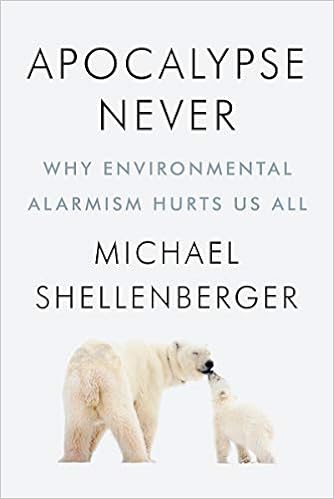
As you might have guessed from the title of his book, Mr. Shellenberger, does not believe in a coming environmental apocalypse, but what you might not guess is he is a lifelong environmental activist, who has given the bulk of his adult life towards saving the environment. He hasn’t changed his desire to save the environment and to have a cleaner, greener earth, but after years of seeing bad data, deceiving documentaries and news reports and ineffective, expensive strategies, he has had enough. The Green New Deal is only one of the most recent faulty, unworkable plans in the news that he cites in his book.
This book documents him taking the time to look at the complex world we live in and come away with a different viewpoint. Unlike some environmentalists, Mr. Shellenberger is not anti-human. He has seen the good and the bad that humans have wrought on our planet and believes in the ability of mankind to solve many of the problems that they create. He sees human progress as moving forward in a way that provides varied outcomes for the environment. Because of this, human outcomes which are positive are encouraged and applauded by the author.
In an article that originally appeared in Forbes, shortly before the launch of his book, Mr. Shellenberger offered an apology for his years contributing to overstated environmental alarmism. “Climate change is happening. It’s just not the end of the world. It’s not even our most serious environmental problem.” What he discovered was the type of unfounded, apocalyptic end times scenarios being pushed by celebrities, the media and those who earned their living from this type of hysteria was damaging real world efforts that had a chance to be effective in helping the environment in tangible ways. As someone who deeply cared about solving environmental problems, he couldn’t be silent any longer.
Some highlights from the book:
Factories and modern farming are the keys to human liberation and environmental progress
The most important thing for saving the environment is producing more food, particularly meat, on less land
The most important thing for reducing air pollution and carbon emissions is moving from wood to coal to petroleum to natural gas to uranium
100% renewables would require increasing the land used for energy from today’s 0.5% to 50%
We should want cities, farms, and power plants to have higher, not lower, power densities
Vegetarianism reduces one’s emissions by less than 4%
Greenpeace didn’t save the whales, switching from whale oil to petroleum and palm oil did
“Free-range” beef would require 20 times more land and produce 300% more emissions
Greenpeace dogmatism worsened forest fragmentation of the Amazon
The colonialist approach to gorilla conservation in the Congo produced a backlash that may have resulted in the killing of 250 elephants
The author spends much of the book addressing some of the false beliefs that have been spread regarding nuclear power. As a native Californian, he gives detailed accounts from the front lines of these battles there. The author points out how former governor Jerry Brown worked actively to kill and defund nuclear power projects in their state, all while he was receiving funding from oil and natural gas companies. Tom Steyer, who ran for president in 2020, is cited as having done more to kill nuclear efforts than almost anyone else. Mr. Steyer’s wealth is mostly derived from fossil fuels. Modern nuclear power is noted as the most “green” power source available and Mr. Shellenberger is an advocate of accelerating the adoption of nuclear power as one of the greatest potential solutions to environmental challenges.
“Environmentalism today is the dominant secular religion of the upper middle class elite of most developing Nations”
Michael Shellenberger
If there are real environmental problems with potential, tangible solutions, why are people so distracted by the extremes we see presented in the media. As stated in the quote above, this type of extreme viewpoint has become more of a religion than anything else. Religious themes are common in the modern environmental movement. Many are promoting an apocalypse and a doomsday that has been led by groups such as Extinction Rebellion, who the author refers to as, “an upper middle class death cult.” Mr. Shellenberger finds a strange blending of Judea-Christian myth mixed with secular humanism which are intended to bring environmentalists lives meaning, in much the same way you might find in conventional religions. They see a Apocalypse coming and are able to place themselves as the hero or savior of their own morality tale, all built on “science” rather than faith.
The irony is much of what they seem to be basing their religion on is more pseudoscience. The authors concern is that this use of pseudoscience and doomsday models will cause an growing number of people to dismiss legitimate concerns about the environment and climate. Mr. Shellenberger’s perspectives provide a helpful middle road for those who are willing to listen. He promotes human flourishing through what he calls environmental humanism. You might find that you don’t completely agree with him, but the road it presents is one in which it is much easier for people coming from opposing sides to have the potential to find a common ground.
In the world we live in now, whether the topic is the environment, politics or other current news items, we need more voices like Mr. Shellenberger to show us a way that is not reactionary and is seeking solutions that take the best interests of the multiple parties involved into consideration. His perspective is one that is balanced by a love of nature and a love of humanity. His desire is to engage people with stories based on science and reality and draw people together, not divide them and condemn them. It is refreshing to read a book like this that still contains some bad news about the environment, but balances it with encouraging updates on successes that have come about through the type of cooperation he calls people to.
I would encourage you to take the time to read Apocalypse Never: Why Environmental Alarmism Hurts Us All. Unlike some other movies or books about the environment, you won’t come away either hopeless or dismissive and with that I believe Mr. Shellenberger has truly accomplished his goal.
There are a lot of arguments these days about what is the proper response to the Covid-19 crisis. Lockdown, stay open, wear a mask, don’t wear a mask, your work is essential, mine is not. Many of these have been boiled down to short, marketable anecdotes: “Flatten the Curve”, “Stay home, save lives”, “Be a good neighbor, wear a mask.” The darker side of this is that some people don’t encourage these behaviors with these kind of cheery sayings, but with aggressive words, profanity and sometimes, violence. People have adopted a viewpoint (whatever that might be) and they feel a self-righteous fervor in demanding compliance to that viewpoint. Fist fights and shouting matches have broken out over things people had no opinion at all about when 2020 began.
Just look at this lack of social distancing! – Photo by Vera Arsic on Pexels.com
The irony is many of the people who are making the majority of the arguments and deciding the official local government stipulations for your community will be okay whatever the decision. They are like many people in that they are among the “protected” a group that has the freedom to do their job remotely. They can adjust to whatever changes are necessary for their children to continue to receive a quality education and put themselves into a bubble that will allow them to completely avoid exposure whenever they choose. This, of course, is made possible by a larger class of society, the “unprotected”, who are “essential” to our society continuing or deemed “unessential” and probably found themselves unemployed.
If you are reading this, you are more likely a part of the protected class as far as the world goes, as access to the internet, the ability to read in English and the leisure time to do so are leading indicators of being protected worldwide. One blogger described his protected experience like this: “I’ve observed the tech industry for two decades; it’s a job, but it’s hardly work: I’m a nerd; I like science, technology, and medicine. Right now, I couldn’t be more comfortable in lockdown. Amazon supplies my dry goods while a friendly driver brings my groceries. My family and I are safe. No one comes near us without a mask. I control my environment; I choose the people in whose presence I’ll work, if any.”
The growth of tech and office work has been good overall. Some may have been downsized or lost their jobs, but chances are, if they still have their job, they are able to function in much the same way as the blogger above describes. For this type of worker, they can argue for extended lockdowns and restrictions with little thought of how those changes might impact them personally.
The same blogger contrasts his lifestyle with that of what he might have become, if he had continued in his family’s working class roots: “He commutes by bus, encountering irresponsible louts who refuse to mask up. He worries about it, too. His wife, who had earned a second income, is at home supervising their kids. He lives by the lunch buzzer and the punch clock. If there’s music where he works, it’s amplified by cheap, overdriven speakers and the genre will suit him only by chance. The temperature and ambient noise and lighting were calibrated by industrial psychologists. He can’t evade disagreeable co-workers. He’s paid far less than a family wage, but he’s got no health coverage or pension. He endures daily uncertainty about his family’s needs.” This is but one example of the unprotected we mentioned earlier.
Another example is small business owners. Most small businesses were deemed nonessential during the initial days of the pandemic and ordered closed. Some of these businesses faced this even though their main competitors such as Walmart and Amazon were allowed to remain open. In some places, small businesses such as restaurants and bars still face such heavy restrictions that they must chose to stay closed or open and operate at a heavy loss. All of this has been devastating, with some estimates as many as 25% of all small businesses are considering closing permanently, with more than 100,000 already closed for good.
Small businesses fail every day during normal times, but this is different. Some of these were successful before the lockdowns and there are heartbreaking stories of multi-generational businesses closing down after decades. These represent not only the families that are the owners, but also the many people they hired in their communities. Where does a small business owner turn when they have lost the only business they have ever known.
Social issues abound for the unprotected. Some families were able to enjoy the extra time together that a lockdown brought, but for others, it put their families and some family members at risk. One local government official called for people to remember the “silent victims“. He said, “Over the generations, our society weaved a fabric of safe spaces — schools, churches and community centers that created a patchwork of places that monitored the safety of children. The fabric of our society, as thin as it has been for many of our neighbors, is now failing for those who cannot afford for it to fail, and the consequences are deep, heartbreaking and generational.” At risk kids saw their risk increase dramatically when these safe spaces closed down.
Adults are feeling the effects as well, with one survey finding 44% of Californians were suffering from anxiety or depression when surveyed this summer, a 4 fold increase from a similar survey from the previous summer. Hotlines have also noted an increase in calls from those at the point of suicide or self harm. 911 calls for domestic violence are on the increase as well. We could also mention those with increased health risks because of missed health screenings or delayed treatment. In Colorado, the local paper cited increases in deaths by heart attack and cancer in addition to an increase in suicide deaths. Many think it will be years before we know the long term health consequences of delayed treatments.
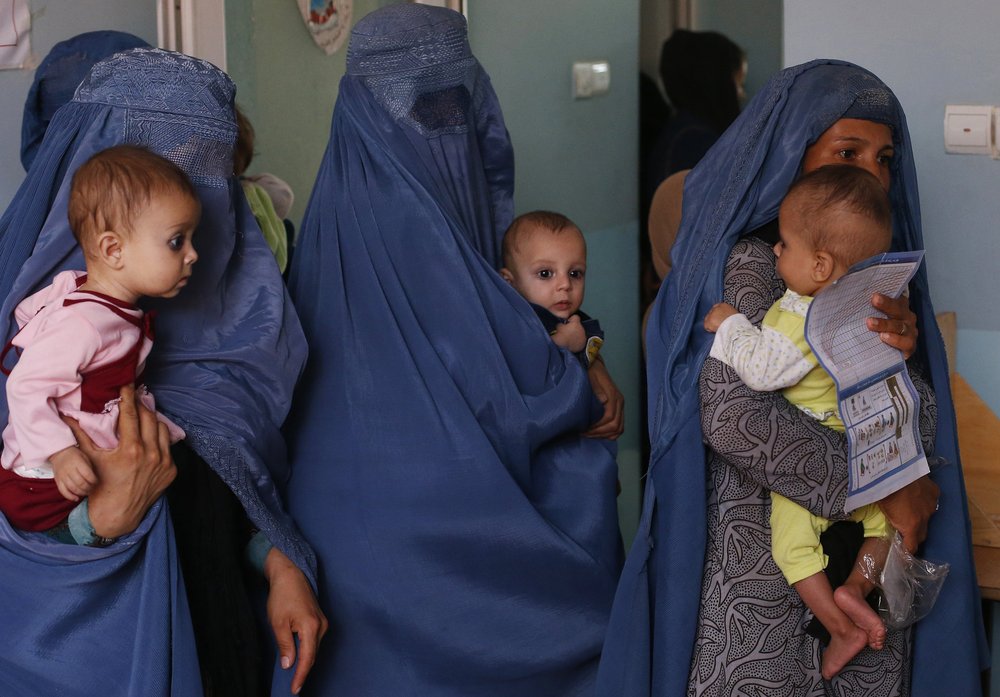
All of these examples are horrible, but they pale in comparison to the impact on those around the world. We live in a Global, highly-interconnected world economy and shutdowns in the US and Europe have a ripple effect in Asia, Africa and South America. Unlike most ripples, the unprotected nature of those impacted in these countries means the ripples turn into waves, with the potential to wash them away. In an AP news report, “All around the world, the coronavirus and its restrictions are pushing already hungry communities over the edge, cutting off meager farms from markets and isolating villages from food and medical aid. Virus-linked hunger is leading to the deaths of 10,000 more children a month over the first year of the pandemic, according to an urgent call to action from the United Nations”.
In this Aug. 26, 2019 photo, mothers hold their babies suffering from malnutrition as they wait at a UNICEF clinic in Jabal Saraj, north of Kabul, Afghanistan.(AP Photo/Rafiq Maqbool)
The article continues, “Further, more than 550,000 additional children each month are being struck by what is called wasting, according to the U.N. — malnutrition that manifests in spindly limbs and distended bellies. Over a year, that’s up 6.7 million from last year’s total of 47 million. Wasting and stunting can permanently damage children physically and mentally, transforming individual tragedies into a generational catastrophe.” We can’t ignore this. Decisions made locally have a global impact. The people making these decisions can’t ignore these ripples. They can’t ignore the unprotected in their community or around the world.
We live in a complex world. Decisions this important can’t be summed up in a meme or quick anecdote. I don’t have the answers to the problems the world faces, but when we are making decisions about what to do in the future, we have to look at them as the many-layered strata that they are. An epidemiologist will tell you how to deal with an epidemic. A virologist will give advice on how to fight a virus. An economist will give advice on how not to destroy the economy. A leader has to make a decision based on a variety of voices, but most of the people giving input are a part of the protected class. The unprotected must have a voice as well. Make sure these “silent victims” are never ignored again.
An aside for those of you who join me in the Christian faith. We are called as a part of our belief to care for the unprotected. Isaiah 1:17 calls on the followers of God to: “Learn to do good, seek justice, rebuke the oppressor, defend the fatherless, and plead for the widow.” Jesus said He came “to bring good news to the poor, He has sent me to proclaim release to the captives and recovery of sight to the blind, to let the oppressed go free, to proclaim the year of the Lord’s favor.” Luke 4:18-19 All around the world, Christians acting together and as individuals have done more for the unprotected than any other group. You personally may be a part of the protected, but there is someone in your community who needs your help and there are victims who need us to stand up for them. We are the essential, frontline workers in the fight against injustice.