Would You Rent a Friend?

Did you know you can rent a friend now? A few months ago, I came across this website, Rentafriend.com. No matter where you are in the world, they are building a database of people who are willing to rent themselves out to you as a “friend”. As I checked the website today and they had 621,585 friends available for rent worldwide. In addition to events that you might hire a friend for such as fun outings, activities and even dates for things like proms and weddings, they are encouraging “Virtual Friend Services” in order to comply with local Covid restrictions you might have in your area. So, you can pay people to hang out with you online and in person.

For these services, you can pay $10/hr or more, depending on the friend and the desired activity. The website does note that many of the friends will negotiate and some will waive their fees for some activities. In looking through the website and the different uses that they highlight, it is easy to see the appeal. Some of the things suggested are:

  • Moving to a new town and need a local to show you around and introduce you to people
  • Looking for someone with a unique talent or skill they could teach you such as learning or practicing a new language or learning to cook
  • Don’t hire a personal trainer, hire a friend to workout with you and help motivate you
  • And of course, the plot of many a B movie, you need a date for a wedding, dinner party, etc. and don’t have anyone to go with

The site discourages romantic friendships, stating that it is only meant for plutonic friendships. I’m sure this is to help avoid it being accused of being a pseudo escort service. When I first heard about the site, my first response was to dismiss it as a joke. It does kind of sound like the plot of a movie, but when you look at the site and browse through some of the profiles, you find people from all walks of life, looking to connect with other people. The growth of the site over time as well as competing sites which have emerged demonstrate the market for this kind of thing. The use of the word friend here may be similar to the way it is used in the online world, meaning it has a very broad definition.

There is no data on what might be called true friendships that have developed as a result of connections made through sites like these, but it seems like the very nature of the relationship would be a barrier towards a true lasting friendship. After all, you are basically paying for someone to stand in as a friend for a limited time. What this demand definitely does point to is the need for community. God has created us to desire community with other people. I know introverts would argue that point, but the vast majority of introverts I have known personally do want community of some sort, it is just usually on a more limited basis than our extrovert friends and might look somewhat different.

From the beginning, God’s plan was for us to be together, not alone.(Gen 2:18) Jesus’ plans for His Church was not to send them off by themselves, but in both the teachings of Jesus and His followers “together” is emphasized. Here are but a few examples:

  • Jesus Christ laid down his life for us. And we ought to lay down our lives for our brothers and sisters. (1 John 3:16b)
  • Bear one another’s burdens (Galatians 6:2)
  • Serve one another (John 13)
  • Encourage one another (1 Thessalonians 5:11)
  • Live in harmony with one another (Romans 12:16)
  • Be honest with one another (Colossians 3:9)

In the book of Hebrews, the author writes that they should “not giving up meeting together.” In the book of Psalms the author writes, “How good and pleasant it is when God’s people live together in unity!” This is a small collection of just a few of the many verses that encourage and describe the community of God’s people. But what about friendship? We were made for community, but what about friendship?

Friendships are sometimes marked by power dynamics. Rentafriend.com spells that out and makes it a formal transaction. You are paying for an agreed for service, not much differently than when you hire someone to fix your plumbing or bake you a cake. Real friendships also can be marked by this kind of relational give and take. Similar to the story of the prodigal son, you can see people who have money and influence and they will find no shortage of friends as long as that continues, but when that dries up, many of these friends disappear. While there is no formal rental agreement in these situations, some people chose friendships solely for what they can get out of it. Have you ever had that “friend” who you only hear from when they need something from you? Unfortunately, this is fairly common.

Other people choose friendships for an emotional “payment”. They aren’t looking for a financial gain, but they choose to surround themselves with people who will make them feel good about themselves. You can see this in real life and social media. The contrast of this is we avoid those who consistently make withdrawals from our emotional bank account.

None of this is what God created us to crave. We desire something greater than this and it is the absence of true friendship and community that spawns the need for people to seek other escapes or to be willing to rent a placeholder for an actual friend. None of us want to Rent-a-friend. We want a real friend, but not one who is only there for the wrong reasons, but instead someone who will really care about us in the manner in which the Bible describes community and friendship.

We want friends who are:

  • Loyal and ready to help in time of need (Proverbs 17:17)
  • Who stick closer than a brother/sister (Proverbs 18:24)
  • Who are willing to sacrifice for the sake of our friendship (John 15:13-15)
  • Who are reliable (Proverbs 20:6)
  • Who give good advice (Proverbs 12:26)
  • Who will love us with a pure heart and gracious speech (Proverbs 22:11)
  • Who will tell us what we need to hear (Proverbs 27:5-6)

Solomon writes:

Two people are better off than one, for they can help each other succeed. If one person falls, the other can reach out and help. But someone who falls alone is in real trouble. Likewise, two people lying close together can keep each other warm. But how can one be warm alone? A person standing alone can be attacked and defeated, but two can stand back-to-back and conquer. Three are even better, for a triple-braided cord is not easily broken.

(Ecclesiastes 4:9-12, NLT)

The answer to our friend problem starts with us. Don’t be satisfied with being alone. Pursue deep relationships. Join a church where God is worshipped in community, not just for an hour on Sunday morning. Be a part of a Bible Study or small group where they challenge you to grow and care enough to want to know more about what is going on in your life than just “I’m fine” or “We’re okay”. Real community and friendships are built by sharing life. Don’t eat alone. Invite people to go along with you on trips or when you have things to do. Invite people over to your house to play games or for even a night of good conversation. Welcome the new people in your neighborhood, church or community. God created us to need each other and to desire this kind of community. Life is better together.

The Amazing Life of George Liele, One of the First Modern Missionaries

In the history of missions, there are many names worth highlighting. Great biographies have been written about men like Hudson Taylor and Adoniram Judson. In my own tradition, we honor the name Lottie Moon by naming our offering for International Missions after her. Their lives are inspiring stories of sacrifice so that the name of God might be glorified and the Gospel of Jesus Christ proclaimed in fulfillment of God’s call for His followers to “go and make disciples of all nations.” (Matt. 28:19-20) One astounding story that you might not have heard involves God’s transformative action in creating beauty from the ashes in the life of a slave, George Liele.

Born a slave on a Virginia plantation in 1750, George didn’t remember much of his childhood, except for being moved from place to place before finally being owned by a Baptist deacon in Georgia. His father was a follower of God, whom George recalled hearing about, “my father was the only black person who knew the Lord in a spiritual way in that country.” In 1773, at the age of 23, George accepted Jesus Christ as his Lord and Savior while attending church with his owner, Henry Sharp. George felt a passion to share the Gospel amongst his fellow slaves and began preaching among them wherever he could find opportunity, both across Georgia and into South Carolina.

Mr. Sharp recognized the spiritual value of George’s preaching and gave him freedom to travel around in order to exercise his gifts and calling to the Lord. On May 20th, 1775, just 2 years after his conversion and baptism, he was ordained to the Gospel ministry by Mr. Sharp’s pastor, the Rev. Matthew Moore, the same man who had baptized George earlier upon his salvation. Mr. Liele was the first ordained Baptist black pastor in Georgia. He was seen not only as a pastor, but a missionary to his own people in Georgia and S. Carolina. In Silver Bluff, South Carolina, Mr. Liele would found the first African Baptist Church, which is still in existence today. He would go on to plant several churches in both Georgia and South Carolina, among the slave population.

Like many slaves, George Liele would side with the British in the revolutionary war. Mr. Sharp also sided with the British, finally freeing George in 1778. Unfortunately, Mr. Sharp was killed in the war later that year and his heirs wanted to re-enslave George, along with his family. He was thrown in jail, but was released when he presented papers signed by Mr. Sharp, which had freed him. As the war came to an end, Mr. Liele was forced to flee with his family. He would choose to become an indentured servant in order to pay for him and his family’s passage by boat to Jamaica.

George arrived in Jamaica in January of 1783, and worked hard to quickly repay his debt and earn his freedom for a second time. He soon was able to secure permission to preach the Gospel to the slaves on the island. So, working to support himself, much in the same way the apostle Paul did as a tentmaker, George began his Gospel ministry as a missionary to the slaves of Jamaica. This was a full 10 years before William Carey would be sent out from England to India and almost 30 years before Adoniram Judson would be “bound for Burma.”

In his first 8 years of preaching the Gospel there, Mr. Liele would baptize over 500 people, all the while supporting his family by farming and transporting goods with his wagon and team. Since his ministry was among the slaves, they never had money to support him, instead it was often George who gave financially to them, in addition to the spiritual blessings he brought their way. Mr. Liele organized them into congregations based on a church covenant he adapted to the local context.

George’s ministry was not always welcomed by the slave owners. Around 1802, he was charged with preaching sedition and was thrown into prison, his family not permitted to see him. He was tried for the charges, but no evidence could be brought against him and he was acquitted. In 1805, a law was passed, forbidding all preaching to slaves. Though not always enforced, the law essentially gave permission for slave owners to strike out and persecute the missionaries whenever they desired. Instances of murder, sexual abuse, imprisonment and other brutality were commonly reported in the missionary accounts of the day until 1834 when slavery was abolished.

George would die in 1828, never seeing physical freedom brought to many who he led to spiritual freedom, but accounts point that his efforts, either directly or indirectly led to a count of 8000 Baptists in Jamaica in 1814 and 20,000 numbered in 1832. In addition to the work on the island, many of George’s converts would go on to plant churches not only in Jamaica, but back in Georgia and as far away as Nova Scotia and Sierra Leone.

He preached the Gospel to a people in bondage, much as we see many of the preachers in the NT, as well as Jesus. George offered up an eternal hope of freedom, regardless of physical bondage, similar to what we find in 1 Peter 2:

16 Live as free people, but do not use your freedom as a cover-up for evil; live as God’s slaves. 17 Show proper respect to everyone, love the family of believers, fear God, honor the emperor.18 Slaves, in reverent fear of God submit yourselves to your masters, not only to those who are good and considerate, but also to those who are harsh. 19 For it is commendable if someone bears up under the pain of unjust suffering because they are conscious of God. 

Mr. George Liele is definitely a name worth remembering as a fervent example of someone who did not let the difficulties that he faced impact his efforts for the growth and establishment of the Kingdom of God. During his lifetime, the majority of those to whom he proclaimed his message of freedom and salvation would continue to suffer under the bondage of slavery, but through his efforts and the power of the Gospel, they would find a freedom that is greater than any bonds of this earth.

For those looking to learn more about this incredible man, there are many resources available, some of which I used for this article. I also recommend the book, Ten Who Changed the World, which discusses George Liele as well as some of the others mentioned in this article. Finally, you can listen to the voices of pastors and missionaries today, who speak kindly of the influence of George Liele in these videos.

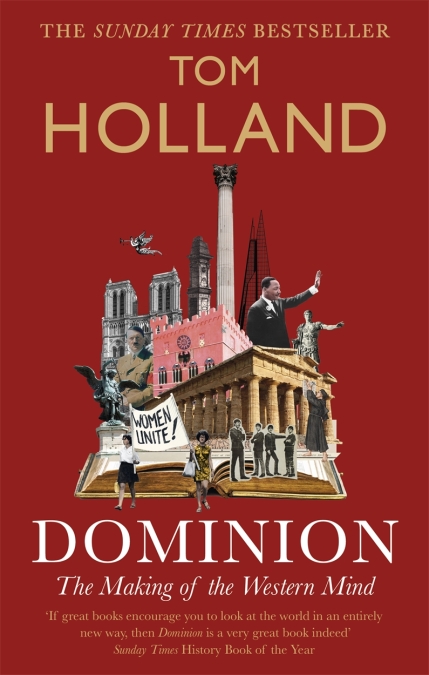
Dominion by Tom Holland – Book Review

The name Tom Holland is fairly well known in the world right now, unfortunately, most people know the name because of its connection to the actor who plays Spiderman, and not the academic who is a world class historian and writer. Both are from England, but it is the later who is author of Dominion: How the Christian Revolution Remade the World. I have read several books that attempt to write a history of Christianity, including some written as academic works. This book is quite different in that it was written from a secular perspective, but with a kind of respect for the movement of Christianity that is often found lacking in mainstream academic culture. The author points to his own drift from a Christian upbringing and the dismissal of Christianity’s influence as persistent in his studies.

“Assumptions that I had grown up with – about how a society should properly be organised, and the principles that it should uphold – were not bred of classical antiquity, still less of ‘human nature’, but very distinctively of that civilisation’s Christian past. So profound has been the impact of Christianity on the development of Western civilisation that it has come to be hidden from view. It is the incomplete revolutions which are remembered; the fate of those which triumph is to be taken for granted. The ambition of Dominion is to trace the course of what one Christian, writing in the third century ad, termed ‘the flood-tide of Christ’: how the belief that the Son of the one God of the Jews had been tortured to death on a cross came to be so enduringly and widely held that today most of us in the West are dulled to just how scandalous it originally was. This book explores what it was that made Christianity so subversive and disruptive; how completely it came to saturate the mindset of Latin Christendom; and why, in a West that is often doubtful of religion’s claims, so many of its instincts remain – for good and ill – thoroughly Christian. It is – to coin a phrase – the greatest story ever told.”

In the modern western world, it is common to dismiss the Church and to look down upon religious people for their conservative beliefs. The new terminology that is often used is to talk about being on the right side of history. Those who do not go along with progressive thought are condemned as being stuck in the past and held in contempt for failing to wake up and get with the program. This book presents a compelling case that without the influence of Christianity, the entire framework from which arguments about human rights are made wouldn’t exist. As stated in the quote above, declines in the prominence of Christianity in many western nations has actually allowed this influence to become hidden and unknown. What Mr. Holland has done in this work is to systematically walk the readers through a pre-Christian world, the events of the founding of the religion and key points of societal shift that occurred over the last 2000 years. He is not a champion for the Church, or any specific branch of Christian faith, but rather a defender of the powerful formative influence of the teachings of Jesus and the practices of His followers as they lived out those teachings.

A few such examples are as follows:

  • Women’s rights in marriage and in the community. “The insistence of scripture that a man and a woman, whenever they took to the marital bed, were joined as Christ and his Church were joined, becoming one flesh, gave to both a rare dignity. If the wife was instructed to submit to her husband, then so equally was the husband instructed to be faithful to his wife. Here, by the standards of the age into which Christianity had been born, was an obligation that demanded an almost heroic degree of self-denial.” Double standards were the norm in pre-Christian society and it continued in the world into which Christ came and into which the Church grew, but the Church was called to a radically different view of the woman’s role in the marriage and in the world. Even the very idea that sex should be consensual didn’t exist on any widespread basis before Christianity. Marriage, as envisioned in the New Testament, was a great protection for women.
  • Similarly to women’s rights, the idea that human beings inherently had rights because they were human was a Christian invention. This is a foundational principle for what is considered good law, justice and governance today. None of this existed prior to the Christian religion. This included the right to practice religion freely. “We are fortunate to enjoy the rare happiness of living in a republic where every person’s liberty to judge for himself is respected, everyone is permitted to worship God according to his own mind, and nothing is thought dearer or sweeter than freedom.” Human life was cheap in the ancient world and Christianity, more than any other influence, has acted to add value to human life and individual liberty.
  • Scientific progress was driven by a Christian viewpoint that the world was real, unlike the eastern view that much was an illusion. The rational pursuit to understand God’s creation was a driving force behind much discovery. This idea is addressed here, but is not fully developed.
  • Slavery was the norm in the ancient world, the Biblical world and the NT teachings didn’t abolish slavery, but taught a different way for its followers. Slaves were not to be treated differently. Teaching about this and other human rights led Christians to lead the way to eventually eliminate slavery from their cultures. It still exists in societies that do not hold to this Christian heritage. “To target it (slavery) for abolition was to endow society itself with the character of a pilgrim, bound upon a continuous journey, away from sinfulness towards the light. It was to cast slavery as a burden, long borne by fallen humanity, but which, by the grace of God, might one day loose from its shoulders, and fall from off its back, and begin to tumble.” Christian abolitionists like Benjamin and Sarah Lay and William Wilberforce were willing to stand against the tide of the world to see this changed.
  • Protestant and Catholic missions were not driven by the profits of colonization, but rather by the call of the Gospel and the Great Commission. They brought not only the Good News, but also the same culture-transforming views of liberty, human and women’s rights that helped transform the societies they encounter. For a more complete documentation of this, I recommend Robert Woodberry’s excellent paper, The Missionary Roots of Liberal Democracy.
  • Generally, Christianity brought not just the hope of Christ to a world in need, but a hope for a better tomorrow. A belief that history would allow for progress in areas like justice and peace was a uniquely Christian idea. Christians believed in eternal life, but they also believed in the ability of people to be transformed on this earth by the power of God working in them. “Repeatedly, though . . . it was Christianity that . . . provided the colonized and the enslaved with the surest voice. The paradox was profound. No other conquerors, carving out empires for themselves, had done so as the servants of a man tortured to death on the orders of a colonial official. No other conquerors . . . had installed . . . an emblem of power so deeply ambivalent as to render problematic the very notion of power.”

These are but just a few examples found in this sweeping history. There are other books that are more thorough, offering a more complete coverage of Christian history, such as Diarmaid MacCulloch’s Christianity: The First Three Thousand Years. I’m partial to Rodney Stark’s works on the subject, such as The Rise of Christianity and The Triumph of Christianity, which I believe Christian readers will find overall more satisfying. What Holland offers that makes Dominion special is the specific connections to Christianity’s influence on the modern world, from a more secular perspective. As our world attempts to pretend that it is possible to hold to morality without a belief in God, this is a very significant reminder.

Recently, I read another article that talked about how the TV show Ted Lasso was presenting a main character who had all the markings of an evangelical Christian in his character and behavior, but without any connection to the Christian faith. The author, Mike Frost, suggests that this sitcom seems to suggest, “we can have all the things Jesus taught without having to bother with Jesus himself.” This is also the message that Mr. Holland seems to be addressing as well. He is explaining to the world, every so carefully, that these many things that they find virtuous, did not exist without Christianity.

Another author, Mark Sayers, talks about the desire of society to create a “Kingdom without the King.” He said in an interview, “Post-Christianity is ultimately the project of the West to move beyond Christianity whilst feasting on its fruit. Thus, it constantly offers us options and off ramps, in which we seemingly can have what we enjoy about faith, but without the sacrifices and commitments.” This is a common dream, to have all the benefits of a Christian morality while at the same time not having to be answerable to a Christian God.

Mr. Holland ends his book with an open question that relates to this, “If secular humanism derives not from reason or from science, but from the distinctive course of Christianity’s evolution—a course that, in the opinion of growing numbers in Europe and America, has left God dead—then how are its values anything more than the shadow of a corpse? What are the foundations of its morality, if not a myth?”

This question doesn’t point to the inability of an individual to hold to a high standard of morality without God. We have all seen examples of that over time, but instead it is the question of whether or not whole societies will be able to continue to hold onto morality and values even as they abandon everything that brought that morality into existence. That is a question that we don’t know the answer to yet, but if we hold to the truth of the Bible’s teaching, we are likely to find ourselves expecting a very negative outcome.

Increased Tribalism is Not the Answer

Tribalism is nothing new. Humans have always divided themselves into groups and aligned themselves along certain interests and ideologies. Growing up, I was a Sooner and I wore my crimson and crème with pride. I detested orange clothing, in all it’s shades. This was especially challenging for me as I attended a high school that had orange and black as our school colors.

Sports provides a strong example of tribalism, but even if you don’t find an interest in sports there were other things to align ourselves with. It could be a favorite band or singer, a restaurant, a clothing brand or even the church you attend. It is human nature to put ourselves into groups and to define ourselves by the groups we belong to. For the most part, this type of tribalism has existed as harmless fun. We all know someone who probably took it too far, but for most of us, we just enjoyed good natured ribbing when our “tribe” came out on top.

Advertising executives definitely recognize this and make it a core part of their strategy to get people to identify with their brands in this way. They don’t just want casual customers, they want people who will commit to their culture and influence others to do the same. Influencers is now a career for many people who have mastered the art of marketing themselves and the products they use/promote so well that they can earn a living off of doing nothing but that.

There is one area of tribalism that you may think is missing from what I’ve discussed so far, and that is politics. Politics used to be like some of these other tribes. People used to think about it in November, sometimes only every 2 or 4 years. Some issues were always considered political, such as taxes and the military, but few people who weren’t directly involved in politics spent much time thinking about the impact and influence of politics on our daily concerns. I remember in the 80’s and 90’s having some thoughts about politicians, but only being vaguely aware of whether the people around me were of the same political tribe as me.

It just didn’t matter that much. It didn’t seem like real life. Real life was lived with real people as we went about our business, built our communities, worshipped our creator and generally, enjoyed life. Somewhere along the way, things began to accelerate into a very different direction. It didn’t happen overnight, but in the world today, everything seems political. It bleeds over into our sports, into our schools and even into our churches. Everyone is pushed to choose a tribe and to align with those interests.

We have rejected an opinion-less life in order to have a politically-aligned take on just about everything. Just as we have social media influencers who are pushing us to want to use certain brands and products, there is a huge industry out there pushing us to align with the opinions of others, to join their tribe and unfortunately, to condemn, make fun of and reject those with differing opinions. This is fueled by the distance of the Internet, where we can judge everyone, including those in our neighborhoods, communities and families at a distance. We have the freedom to cast out anyone whose allegiance to our tribe seems to buckle with an inappropriate post on social media.

We’ve just finished an incredibly divisive last 2 years. Most likely, there are people who you consider to be members of other “unclean” tribes today that you weren’t even aware of even a few years ago. The ability for you to live your life daily in a way that is glorifying and honoring to God and loving to your fellow travelers has been damaged by all of this. The divisions that exist are deep, but they don’t have to be permanent.

Some people act like a politician they are defending on social media is some rich aunt and uncle and they are trying to earn a spot in their will. Seriously, why do you care so much about all of these things? Why are you willing to break a real relationship that you may have had for most of your life, for the sake of someone who wouldn’t give you the time of day if they passed you on the street. It’s okay to care about these things. It’s okay to vote for your convictions, but defining our lives by political tribalism is a destructive way to live. Do any of these things really bring joy into your life as believers?

In 1 Peter 2, Peter writes:

9 But you are not like that, for you are a chosen people. You are royal priests, a holy nation, God’s very own possession. As a result, you can show others the goodness of God, for he called you out of the darkness into his wonderful light. 10 “Once you had no identity as a people; now you are God’s people. Once you received no mercy; now you have received God’s mercy.” 11 Dear friends, I warn you as “temporary residents and foreigners” to keep away from worldly desires that wage war against your very souls. 12 Be careful to live properly among your unbelieving neighbors. Then even if they accuse you of doing wrong, they will see your honorable behavior, and they will give honor to God when he judges the world.

As followers of Jesus, we are different, and we are called to be recognizable as a different kind of tribe. We are not an earthly tribe, but a tribe defined by God and His ways. This is the identity that has been given unto us. While we live on this earth, we have opinions and preferences. We will have favorite bands and sports teams. We will find the policies of some earthly leaders to seem more true than others, but in all of this, we are not to be defined by those things. We are called to live honorable lives as temporary residents and foreigners in a foreign land.

As we identify with this “tribe”, the tribe of Jesus Christ, we have the opportunity to have an impact that does matter. It matters in our own life, in the lives of our family and in the lives of everyone who we encounter, because if our lives are truly pointing to Christ, then we are pointing people towards the only tribe they can join that will have an eternal impact. Remember that as you journey out into the tribal landscape.

No Peace on Earth, No Good Will for Men

I heard the bells on Christmas Day

Their old, familiar carols play,

And wild and sweet

The words repeat

Of peace on earth, good-will to men!

And thought how, as the day had come,

The belfries of all Christendom

Had rolled along

The unbroken song

Of peace on earth, good-will to men!

Till ringing, singing on its way,

The world revolved from night to day,

A voice, a chime,

A chant sublime

Of peace on earth, good-will to men!

Then from each black, accursed mouth

The cannon thundered in the South,

And with the sound

The carols drowned

Of peace on earth, good-will to men!

It was as if an earthquake rent

The hearth-stones of a continent,

And made forlorn

The households born

Of peace on earth, good-will to men!

And in despair I bowed my head;

“There is no peace on earth,” I said;

“For hate is strong,

And mocks the song

Of peace on earth, good-will to men!”

Then pealed the bells more loud and deep:

“God is not dead, nor doth He sleep;

The Wrong shall fail,

The Right prevail,

With peace on earth, good-will to men.”

Christmas Bells – Henry Wadsworth Longfellow

During times of personal crisis, it is common for us to lose hope. When that is combined with crisis on a greater scale, it is even easier to find ourselves heading towards depression. This beautiful poem, written on Christmas day in 1864 and later turned into a song in 1872, is well known to many, but most people know it from the song, which added further verses. It is usually sung without the middle stanzas of Longfellow’s poem. That leaves out an important part of the journey through despair to hope again.

Longfellow had fallen into depression with the loss of his 2nd wife Frances when her clothes caught on fire while sealing envelopes with hot wax in 1861. Henry had tried to smother the flames, first with a rug and finally with his own body, but the burns were so severe that she ended up dying the next day. Longfellow, who was also badly burned, was so ill that he was unable to attend her funeral. Their 18 years of marriage had been the happiest time in his life and after her death, he all but abandoned his creative work for a time, instead supporting their family by translating other works.

That Christmas Longfellow would write in his journal, “How inexpressibly sad are all holidays.” At Christmas time in 1862 he would write, “‘A merry Christmas’ say the children, but that is no more for me.” Many people can relate to those expressions when they have experienced loss. Family gatherings can be marked more by the absence of loved ones than by those who are present.

1861 would also be a year of national tragedy with the start of the American Civil War. Over the course of the next 4+ years, every American family would feel the impact of this conflict. Longfellow’s family would be no different. His daughters would serve as caregivers to wounded soldiers, and in 1863 his son Charley would go against his father’s wishes and enlist in the Union army. His son would have to leave active service first because of illness and later in November of 1864, when he would be severely wounded in battle. On December 8th, Longfellow would arrive home with his son, where he knew he would spend months trying to help with his recovery.

In the midst of so much ongoing trouble and despair, it would have been expected that Longfellow could lose all hope. Depression is often a journey through a black, dense forest with very little light breaking through the darkness. On Christmas Day of 1864, Longfellow would hear the bells and be inspired to write the words above. The poem contains scenes of both hope and despair, perhaps reflecting the author’s daily struggles since the loss of his wife and in reading the news of the day related to the war. Perhaps because of the recent reelection of Lincoln or the possible nearing end of the war, Longfellow found the hope to end his poem with the words:

“God is not dead; nor doth he sleep!

The Wrong shall fail

The Right prevail,

With peace on earth, good-will to men!”

These recent days have been trying for us all. When we look at the news of the day it would be easy for us to proclaim that there is not peace on earth, but instead proclaim that “hate is strong”. Reviewing the interactions we see around us, we might feel right to proclaim that there is no “good will to men (or women)”. Hostility and division are common place and highlighted. We are encouraged to join man-made tribes that would define others as our enemies and undeserving of any good will.

Into this world, we once again take time to celebrate Christmas. Once again, we hear the bells of Christmas ringing. Christmas is a song that is different than what the world is singing to us. The world sings of hate and despair, division and impending doom. The message of Christmas is the message of hope. It is the message that was proclaimed to those shepherds long ago:

10 And the angel said to them, “Fear not, for behold, I bring you good news of great joy that will be for all the people. 11 For unto you is born this day in the city of David a Savior, who is Christ the Lord. 12 And this will be a sign for you: you will find a baby wrapped in swaddling cloths and lying in a manger.” 13 And suddenly there was with the angel a multitude of the heavenly host praising God and saying, 14 “Glory to God in the highest, and on earth peace among those with whom he is pleased!”

Luke 2:10-14

The angel didn’t offer hope because of the birth of a great military leader, an earthly king or a great teacher. The hope rested in a baby in a manger, who would be the fulfillment of God’s plan. The hope was not for this earth, but for eternity to come. On this earth, we see glimpses of that hope, but it is only fulfilled in the life to come. “In this world, we will have trouble.” (John 16:33) We will see wars, we will face disease, we will face loss that seems avoidable and unnecessary, and we will suffer grief that may seem impossible to face.

Putting our faith in these things will lead us to the answers of this world and will only lead us further into depression and despair. A life built on all that this world has to offer us is a very fragile life built on a house of cards. The reason the angel declared, “peace among those whom he is pleased” was that it was a peace based on the hope of a better world. It was a hope based on eternity.

How do we find this eternity? It is only found in Jesus. Today is the day when we all may find hope fulfilled through God’s son, Jesus Christ. In Romans 10 it says:

8 In fact, it says, “The message is very close at hand; it is on your lips and in your heart.” And that message is the very message about faith that we preach: 9 If you openly declare that Jesus is Lord and believe in your heart that God raised him from the dead, you will be saved. 10 For it is by believing in your heart that you are made right with God, and it is by openly declaring your faith that you are saved. 11 As the Scriptures tell us, “Anyone who trusts in him will never be disgraced.” 12 Jew and Gentile are the same in this respect. They have the same Lord, who gives generously to all who call on him. 13 For “Everyone who calls on the name of the Lord will be saved.”

Hope comes as we look beyond ourselves and resist the temptation to put our trust in governments, people or things. These things will ultimately collapse as they are completely unable and unworthy to bear the weight of true hope. In moments of true despair, it is easy to proclaim that there is no peace on earth and no good will toward men, but God’s message is a different message. It is the message of “good tidings of great joy that will be for all people.” All people, regardless of nationality, upbringing, or present circumstances. The Gospel is a message of Hope that brings ultimate equality as all humanity, unworthy though they are, finds the secret to their ultimate value through the complete worthiness of Jesus. Today is the day of your salvation, you have but to “declare Jesus is Lord and believe in your heart that God raised Him from the dead.” There is no better way to celebrate Christmas.

Is Atheism Dead? by Eric Metaxas – Book Review

Confession – I enjoy Eric Metaxas’ writing. His biography on Dietrich Bonhoeffer makes my top 10 all-time book recommendations for people. His other biographies are well worth reading and he is a gifted story teller, whether he is recounting tales from his own life in Fish Out of Water, telling us about the life of Martin Luther or the history of Squanto and the Miracle of Thanksgiving. I have read the majority of his books (or listened to the audiobook versions). I know what Eric Metaxas is capable of. All of that to say that it pains me to write the opening of this review. Is Atheism Dead? might be the most important book that Mr. Metaxas has written, or at least the 2nd most important after Bonhoeffer: Pastor, Martyr, Prophet, Spy, but it is not a great book.

In reading Is Atheism Dead?, you can feel the author’s enthusiasm for the subject. He is passionate for communication of the truths contained. He has chosen to divide the book into 3 sections. The first one, “Does Science Point to God?”, is a very helpful introduction to the progress that science has made in the modern age. In this section Eric firmly establishes the incredible improbability of life existing on earth or anywhere in the universe. What some refer to as the “Goldilocks principle” meaning that there are many things that can go wrong in either direction and have rendered life impossible, but the universe exists in a very specific way that is “just right”, allowing for life to exist. He quotes Paul Davies, the English physicist in saying:

“Scientists are slowly waking up to an inconvenient truth—the universe looks suspiciously like a fix. The issue concerns the very laws of nature themselves. For 40 years, physicists and cosmologists have been quietly collecting examples of all too convenient “co-incidences” and special features in the underlying laws of the universe that seem to be necessary in order for life, and hence conscious beings, to exist. Change any one of them and the consequences would be lethal.”

Paul Davies

This section is the strongest section and does an excellent job of laying out the “evolution” 😉 of the argument over recent history. This works both as a case for the existence of some kind of catalytic intelligent designer behind all of these coincidences as well as showing the degree of misplaced faith that is required for someone to believe that all of this just happened. Simply, it requires a great deal more faith to believe in the alternatives than it does to believe in some kind of intelligent design behind all of this.

The second section is entitled, “The Stones Cry Out”, and it deals with the archeological evidence that supports the Biblical record. In this section, the author chronicles some of the most significant discoveries that support the authenticity of this record. It is interesting to see so many of these gathered in one place, and the evidence presented can be very encouraging for believers who are not familiar with the strength of this support. The quote that opens this section is a statement that might be surprising to those who have attended liberal-leaning universities anytime recently:

It may be stated categorically that no archaeological discovery has ever controverted a biblical reference.

—Rabbi Dr. Nelson Glueck

Rabbi Glueck is one of many prominent archeologists quoted in this section. In addition, the author introduces his readers to some historical textual criticism techniques which point to the validity of the Biblical accounts. The Bible goes out of its way to include strange details, quirky specific accounts and many records that cast the followers of God, including those who held the pen at different times, in a most unfavorable light. This section is helpful, but lacks flow and is better read piecemeal rather than front to back.

The last section is entitled, “What is Truth?”, and has a difficult time finding a focus for what it is trying to accomplish. Much like the second section, there are pieces here that are very helpful in processing different thoughts on atheism, faith and belief in God, but the section doesn’t lead the readers on a clear coherent path to the answer of the question laid out in the title. Instead, the author starts with an analysis of prominent atheists and some of the limits of their arguments. He asks some relevant questions, such as, “If what they believe is true, why do they care so much about what other people believe?” Why should these atheists care so much that people believe in God?

The answer for many of them seems to be in that they have made a great deal of money by arguing their points and have become very famous as well, but again, what is fame and money if life is without meaning and in the end, we only return to dust, matter in another form? The author presents 3 prominent atheists who genuinely sought truth out of the meaninglessness of atheism, Sartre, Camus and Flew, and as well looks at both historical scientists and scientists of the modern age in order to demonstrate how closely science and faith have always existed, calling them BFFs. The pursuit of meaning and truth is natural for those who hold a Christian world view and a history of scientific progress supports this thoroughly.

I especially enjoyed the author’s research on analysis on the “legend” that it was people of faith who were the most opposed to the heliocentric world view proposed first by Copernicus and later by Galileo. This notion is described by the author as the “Founding Myth of Atheism”. For most of us, the church’s blind opposition to these men’s scientific research was presented to us that proof that the organized church has always stood against science. The reality is nothing could be further from the truth. By contrast, “Galileo was no enemy of the Church—and far from it. He was a deeply serious Christian who saw no disparity between what the Church taught—or what the Bible said—and what science revealed.”

“Copernicus, like Galileo, lived at a time when all truth was one. What he learned via science could never compete with the truth of the Scriptures, any more than science could compete with mathematics. For him, God was the God of all truth, whether scientific, philosophical, mathematical, or theological. So to divide faith and science as we often do today was inconceivable, and Copernicus could never have dreamt that his astronomy might be troubling to the Church, which he—being a clergyman—revered.” Both of these men operated within the support of the mainstream of the Church and were people of faith themselves.

Ironically, the opposition to their theories did not come from people of faith, making an argument from the Bible, but from educated people who resisted the theory because it differed from what they had learned from the teaching of Aristotle. Within and outside of the Church, there were those who came to hold the teaching of Aristotle on equal and in some cases greater ground than the Bible. In fact, many within the Catholic Church had as much a problem with Martin Luther over his non-Aristotelian thinking as anything else. It was these die-hard Aristotelians who refused to look through Galileo’s telescope and see his evidence. The author points out throughout history it is often those with hard-wired bias based on previous scientific thought and discovery who  are the most adamant opponents of new discoveries, not scientists with true Christian faith.

In the last chapter, the author closes his argument by taking a step back once again and looking at what it actually means to live a life without meaning and no greater moral standard of accountability. To take the religion of atheism to its ultimate conclusion is a very dark destination. Most of the modern atheists don’t go there, nor do they lead others, perhaps because they know that no one wants to buy a book based on such a nihilistic counterfeit worldview. Contrast that with the opposing viewpoint, the other side, the people who find their hope in a world that was created for purpose and meaning.

“You get to be a part of giving others genuine hope in the genuine God who is the author of life and hope and goodness and truth and beauty. It is what you were created to do, but perhaps until now you didn’t understand this as you do now. That only means that you can now live as the one who made you made you to live. You can begin now. And this is not merely a poetic or a nice idea; it is true. The God of the universe wants you to spread goodness and truth and beauty wherever you go, to his glory.” This is not just a better sale’s pitch, but it is a more rational, truthful path. The world continues to sell us a message of despair, but this is not the message that God has for you, this is not the life we were created to live.

As I stated in the beginning, this book is not a perfect book. The construction of the book is flawed. Many of the ideas don’t build on what is written before and some details included could have been developed more and others left out, but it is an important book, a significant book and a book that you or perhaps someone in your life could benefit from reading. There are many truths which can serve to reinforce the faith of Christians fighting against a torrent of misinformation. There are some significant arguments that could help turn a true seeker on the right path. Is Atheism Dead? True atheism may have never had a leg to stand on when faced with a rational approach to engaging observable truth, but the scientific discoveries of the last century have moved it firmly into the land of myth, rather than the realm of reality.

Six years ago, the author wrote an article which appeared first in the New York Times on this topic, entitled “Science Increasingly Makes the Case for God.” If you are interested in this topic, read that first and if it that peaks your interest, I would recommend picking up Is Atheism Dead?.

Made for Meaning

Disney and Marvel certainly know how to make money. They own most of the entertainment content that has been profitable on TV and at the movies in recent years. Their latest release is a new branch in the expanding Marvel universe, simply entitled, Eternals. The one sentence description reads, “The saga of the Eternals, a race of immortal beings who lived on Earth and shaped its history and civilizations.” That sounds pretty significant, doesn’t it? These beings by their actions have made key differences throughout the history of our world. This is a fantasy that calls to the core of our lives, the desire for our lives to matter, to make a difference.

God created us with that desire. We were made for meaning. Everyone wants their lives to matter. The irony of this is that movies like this are a part of the society we’ve created which encourages us to live our lives in anything but a meaningful way. Our lives are flooded with opportunities to spend our time on things which add little value to our own lives or the lives of others. The focus is on living a life centered around entertainment and self-service. Whether it be videos, games, or personal experiences, much of the world we live in today is built around people as individuals or in groups pursuing these kind of diversions.

This topic has been written about extensively, and one of the best books on the subject (which turned out to be quite prophetic) is Neil Postman’s Amusing Ourselves to Death, written way back in 1985. Another vision that is worth mentioning comes from Disney again, in the Pixar film, Wall-E. In the film, humans had to abandon earth and survived on board a spaceship where every need is automated. The humans on board have gradually become overweight blobs who do nothing but sit in floating chairs, eating and watching screens. This being Disney, we are spared any exploration into how their other biological processes might be dealt with.

Photo by Erik Mclean on Pexels.com

Recently, as Mark Zuckerberg unveiled his vision for the future of his company, now known as Meta, I couldn’t help but see a connection to the future we see in Wall-E and other science fiction novels and works of fiction. The idea of alternate realities have dominated science fiction in recent years. One of the earliest visions for this was Neal Stephenson’s Snow Crash, first released in 1992. Stephenson coined the term “metaverse”. I wonder if Zuckerberg is paying him anything for that turn of phrase.

In the future environment that is imagined in many of these works, man’s existence is boiled down to very simple terms, usually presenting an idea that what people need to survive is little more than food, water, shelter and entertainment. Work is only done for pleasure and enjoyment, if at all. In most of these visions, it is similar to being on a long international flight that never ends, but without having to share an armrest with someone or to worry about being crammed between narrow seats.

Even if we have the most comfortable chair, the tastiest food and the best entertainment (Wall-E’s vision) is this really all there is to life? Unfortunately, even though the answer to this question should be an obvious “no” for everyone, we aren’t offered a much better alternative if we look at what is emphasized on many platforms today. This is part of the reason depression and drug use is on the rise. The pursuit of nothing but self-gratification is a disappointing path even for those who are mostly successful in this for a season.

As I mentioned in the beginning, we were created for much more than this. We were created to live a life that matters. A life of purpose and meaning. Giving our lives to gain more likes, score more points, attract more followers or have more fun doesn’t fill the void inside of us. Not anymore than the fruitless pursuit of money, power or fame might have done for future generations. Meaning comes from doing, from building, from creating, and most of all in investing in the future. True meaning is not found in artificial pursuits, but in reality, in the opportunity to impact eternity.

The true eternals live all around us. Every person you meet is an eternal soul. They will live on forever after passing from this earth. We can impact eternity every day through our interactions with our fellow ‘eternals’. 1 Peter 2 is a wonderful passage on meaning, especially found through Jesus Christ.

4 As you come to him, the living Stone—rejected by humans but chosen by God and precious to him— 5 you also, like living stones, are being built into a spiritual house to be a holy priesthood, offering spiritual sacrifices acceptable to God through Jesus Christ.

I Peter 2:4-5

9 But you are a chosen people, a royal priesthood, a holy nation, God’s special possession, that you may declare the praises of him who called you out of darkness into his wonderful light. 10 Once you were not a people, but now you are the people of God; once you had not received mercy, but now you have received mercy.

I peter 2:9-10

What does this passage say about God/Christ?

  • Christ is the cornerstone of our faith, upon which everything is built. 
  • Christ was rejected by humans, but chosen by God.

What does this passage say about us?

  • We are living stones
  • We are a holy priesthood
  • When we trust in Him, we are never put to shame
  • We are a chosen people
  • We are God’s special possession
  • We are the people of God
  • We have received mercy

What does this passage tell us to do?

  • Offer ourselves as spiritual sacrifices
  • Believe in Him
  • Declare the praises of Him who called you out of darkness into His wonderful light

This passage is filled with the affirmation of who we are in Christ.  It tells us that we are a part of what He is doing, we are living stones in the Kingdom that He is building.  It tells us that those who don’t believe will stumble over His teaching.

Living stones was a strong contrast to all that people knew of religion in the Gentile-dominated world that Peter lived in.  They worshipped all kinds of God’s, but nothing quite like Christ.  He is the living cornerstone, upon which everything rests.  We are living stones, with which He builds His Kingdom.  What that should tell you is, if you build on His foundation, your lives are spent well.  If you build on your own, there is no way to know the value of our labors.

We are to labor to build on the foundation of Christ, so how do we do that? 

How do we spend our lives for eternal value?

What has eternal value?  God, His Word, human souls.  We spend our souls for eternity by knowing Him and making Him known.  Do you know Him, is your relationship with Him living and active and can you introduce Him to others that you meet?

We have different strategies, different best practices, but if they don’t involve us spending time with the Lord and spending time with people to share about the Lord, then we are probably not using our time wisely.  Let’s look at these verses again in the Message translation:

Whoever trusts in this stone as a foundation will never have cause to regret it. But you are the ones chosen by God, chosen for the high calling of priestly work, chosen to be a holy people, God’s instruments to do his work and speak out for him, to tell others of the night-and-day difference he made for you—from nothing to something, from rejected to accepted.

This is a high calling.  We are God’s instruments, telling others how once we are nothing, but now we are something, in Him.  Telling them how once we were rejected, but now we are accepted, in Him.  Or, as it said in the translation we looked at earlier, “Once we were not a people, but now we are the people of God.” You were created for purpose, for meaning, for your life to matter on the landscape of eternity. As you wake up each day, you can choose to engage with the unreality of Meta, the Matrix, the Metaverse or whatever trendy name arrives in the future for popular distraction or choose that day to invest in the reality that we live in, the only reality that matters in the scope of eternity. This is our eternal opportunity to be “living stones.”

A Call to Action, Not Activism

Our world is filled with calls to action. Many people seem to have the perfect idea of how to solve all the world’s problems. We are called to change for social and racial injustice. We are called to change to prevent a climate catastrophe. What many of these calls have in common is they seek to generalize the problem in order to bring the problem into the lives of everyone. These problems are something we should all care about. Don’t think you are a part of the problem? Well, that is just because you don’t understand the real problems that exist beneath the surface of it all. It seems that only paid experts, politicians and bureaucrats are the only ones who can offer the solutions to these problems.

Regular people are often told they can’t understand the issues. We need courses, classes and professional agencies to study these problems at a deeper level and then these experts will come back to us with solutions that they will then recommend to countries and corporations to implement. There are many problems with this structure, but perhaps the greatest problem is many of those involved only have a job if the problems continue. When you have people who only get paid if the problem exists and/or their solution is the right one there is no incentive to ever come up with a true solution.

One example came recently when the Executive Director of the U.N. World Food Programme stated to CNN that billionaires such as Elon Musk could donate “$6 billion to help 42 million people that are literally going to die if we don’t reach them.” Elon Musk responded with a tweet that said, “If WFP can describe on this Twitter thread exactly how $6B will solve world hunger, I will sell Tesla stock right now and do it,” the billionaire posted to Twitter on Sunday. He later said in a reply that the proof “must be open source accounting, so the public sees precisely how the money is spent.”

Elon Musk is a capitalist and a pragmatist but he, like many other wealthy individuals, often give a great deal of money to help with humanitarian causes. I note this story not to promote the rich or to specifically criticize this one person or agency, but just to point out that implementing solutions to big picture problems on a large scale is complex and the bigger the solution provided by large organizations like the UN, the WHO, and federal governments, the more potential there is for abuse and waste.  Activism can be a positive thing, but real change and real impact is always best carried out for the greatest impact on the local level.

There is a passage in James that has troubled some theologians who are trying to walk the balance beam of being saved by grace and living in obedience to what we have been taught. It is true that salvation is by faith alone. We are saved by grace through the sacrifice of Jesus Christ, but we are not saved to be experts who now have a special status that is elevated above the rest of the world, but to make a difference in our world, first and foremost by proclaiming the truth of salvation through Jesus Christ alone, but also by being the kind of people who make a profound impact on our communities. James talked about this lifestyle in James 1:22-27.

22 But don’t just listen to God’s word. You must do what it says. Otherwise, you are only fooling yourselves. 23 For if you listen to the word and don’t obey, it is like glancing at your face in a mirror. 24 You see yourself, walk away, and forget what you look like. 25 But if you look carefully into the perfect law that sets you free, and if you do what it says and don’t forget what you heard, then God will bless you for doing it.

26 If you claim to be religious but don’t control your tongue, you are fooling yourself, and your religion is worthless. 27 Pure and genuine religion in the sight of God the Father means caring for orphans and widows in their distress and refusing to let the world corrupt you.

We are different from the world in many profound ways and we are called to live according the difference of Christ living in us and through us and the transformation that this will bring as we live in the world. Historically, Biblical Christianity and in recent days specifically Protestant Christianity has brought about community transformation that has impacted those communities in ways far beyond the spiritual realm.

In a peer-reviewed article published in American Political Science Review, Robert Woodberry examines the impact of Protestant Missions on several areas of development. Some of the impact is summarized by the following:

“The influence of conversion for populations is significant, but Woodberry explains that missionaries tended to have a positive influence beyond evangelism.

Christianity is a religion of the book, therefore Christians tended to teach people to read and write. They often brought in printing presses so they could publish religious literature. In some cases they invented alphabets for previously unwritten languages. This led to societal advances that enabled more people to prosper.

Not only did they educate people, but missionaries brought in the concept of private property so traders wouldn’t take advantage of them. They taught new skills, like carpentry and advanced agricultural techniques. Missionaries introduced new crops to countries, which gave indigenous people opportunities to engage in trade with products that were desirable in Europe.”

Dr. Andrew Spencer in the summary linked to above explains this impact in the following way: “As we seek to live as God’s people in our world, we need to keep in mind that the gospel is not just good for our eternal destiny, but it has implications for the world around us. The gospel leads us to fight human trafficking, to seek healthy solutions to poverty, and to be good stewards of our physical environment. It also leads us to be honest in our dealings at work, kind to our coworkers, and diligent in our duties. These things bring about healthy competition and will lead to a better world around us. If the gospel is effective amid colonial imperialism, it can certainly have an impact in our lives today.”

As followers of Jesus Christ, most of us aren’t missionaries in the traditional sense, but we are missionaries who are called to have a Kingdom impact wherever we are found. You have a role to play in your community. Through your presence and the presence of your local Church, the Gospel should be proclaimed in word and in deed so that people might know the truth of its message. Here are 4 specific ways that we as local believers can practice “pure and genuine religion in the sight of God our Father”.

  1. Impacting your community through action, not just activism. Activists tell other people what to do and expect others to change their behavior. We must look for real needs in our community such as homelessness, helping refugees, adopting and fostering children, tutoring kids falling behind in schools, creating jobs that can support a family, and sponsoring/counseling those with drug addiction and mental health issues and be ready to step up and meet those needs. In this way, action will always trump activism.
  2. Impacting the environment through action, not just activism. Make lifestyle changes in your sphere of control that will help the environment and lead efforts to teach others about these practices. Buy less and buy local. Support local farmers. Use less disposable items. Practice recycling, repurposing, reusing things. Use less electricity and live a simpler lifestyle that is not defined by the stuff you have and the trips you take, but by the depth of your friendships and community. Real environmentalists act like it in their daily lives, they are not elites who fly to conferences on private jets or live in mansions with electric bills greater than some communities.
  3. Impact your government by being a moral people, not legislating morality. Immorality is a tax on society. Broken homes, marriages and families impact everyone. Living a life where you treat yourself and others with respect and conduct your daily life according to Biblical values is transformative. Some of the greatest challenges to the Christian faith in history has come when people mixed up their religion with their government. We should want our government to function in a moral fashion, but it starts with a moral people who are not hypocrites, but true followers of Christ.
  4. Impact your world by beginning with personal responsibility and standing up and leading versus calling for others to be forced to comply with your viewpoint. The Christian faith is based on free will and our greatest impact on society is our ability to make changes in our own life for the better and then lead others to do the same. People want to practice the “pursuit of happiness”, and will run towards those who demonstrate the joy that is found only in Christ. By taking responsibility for our own lives and beginning with our local community, we have the greatest impact. Christians of all people should recognize the blessing of following a God who gave us the option to say no to Him. Everyone should want the wonderful life that is available to a follower of Christ, but God destined it that we would each have a choice. We “lead others to Christ”, we don’t twist their arm and force them to our viewpoint.

I would encourage every Christian to a call to action. It is easy to advocate for a position or viewpoint online or with your vote, but that is not where real life is lived out. Instead, we are called to live as salt, which brings flavor to everything it touches and light that shines into the darkness. Be the city on a hill in your community, pointing people on to the one source of our only hope, Jesus Christ, while we live the transformative life that comes from following Him.

How Was Your Day?

Every day is a new day and we start each day with a somewhat fresh slate. We get up and go about our daily activities, going to work, headed to school, some of us interacting with many different people and some with only a few, but at the end of the day a common question that we often hear is something like, “How was your day?” Such a simple question and we often offer up a very simple answer that is not really reflective of the truth of our day:

“Okay”

“Fine”

“Not bad”

“Awful”

“Good”

“Same”

This is a simple scale of polite responses. Sometimes, we take the time to rehash the ends and outs of our day with a spouse or close friend, but most of the time the default response is to offer up a basic summary that is the AM Radio version much more than the 4K version of reality. But the truth is, we all have good days and bad days. Whether we would speak it out loud or not, if forced to do so, we could give each day a rating that may or may not make a passing grade.

So, the question of this article is, “what determines whether you have a good day or bad day?” Usually, the answer to this question falls into one of 3 categories:

  1. Circumstances
  2. People
  3. Choices

Circumstances can be pretty broad, but for our purposes here, we’ll just say these are things that just happen to us on a certain day. There isn’t a bad guy or gal to blame. You didn’t make a dumb decision. Another person’s selfishness didn’t directly mess up your mojo. Instead, these are the days where mayhem reigns down upon us, when nothing seems to go right. Your car won’t start, the bus is late because of traffic, the milk you just bought is already sour, or the meteor falls out of the sky and just happens to land on your neighbor’s trampoline, which flings it through your back window (not scientifically possible, but a vivid picture). When these days happen, it is easy to feel like we shouldn’t have gotten out of bed. From such days are born the ideas of bad luck, karma and a lot of sitcom episodes I watched growing up.

If we are honest with ourselves, we have to admit that most of our bad days aren’t like this. For the majority of us, these kind of bad days where everything seems to go wrong are few and far between. However, while they may be rare, what they are is memorable. Chances are, you can still remember a day or two where one circumstance after another seemed to line up in a symphony of catastrophe. Because they are so memorable, these “Murphy’s Law” days are considered a lot more normal of an occurrence than they actually are. Instead, most of the days we define as bad are a result of the other 2 categories.

The second category is the most common one we will blame our bad days on, people. “Honestly, you wouldn’t believe what ‘________’ did/said”. If we were to summarize all of the evils inflicted upon us by our various bosses/co-workers/neighbors/family members/fellow citizens, you would think we had found a new level of hell to descend to. The modern age has expanded this without limits as now we don’t just have the people we encounter face to face in a given day, but we can get upset and potentially have our day ruined by something that we only read or saw, whether on social media, the news or maybe even based on a meme/hearsay that was passed around. Because of this environment, it is possible for every one of us to find something every day to get upset about. The less of a connection we have with someone, the easier it is to assume the worst.

The irony of this is we often end up letting people we don’t even particularly care for determine whether we have a good day or not. For many people, they allow the speech and the actions of a public figure to destroy their state of mind and their ability to enjoy life with the people they do life and work with. Whether this involves people in the same room or people on the other side of the country, it is a horrible idea to tie our joy and happiness to something so volatile as the actions of others.

Who do you want to control whether or not you have a good day? Do you want to give that power to a politician? Do you want your boss at work to continue to live in your head, long after you leave work? There is an expression that has been going around these last few years that talks about letting someone “live rent free in their head”. With our constant access to worldwide information, this is an even more foolish endeavor. It is shocking to see how many people in America have put Obama/Trump/Biden/etc. in charge of their lives. The irony is people are often giving the people they seemingly dislike the most, the greatest amount of power over their happiness.

This doesn’t just stop there, but spills over into other areas of their lives. The digital world means most people don’t have divisions between our work and home, between the outside world and our personal lives. This means that if we are not disciplined in how we engage with these things, we will allow them to dominate every area of our lives. We see a lot of misery in this world today. A lot of unhappiness, and in some people, a complete absence of joy. This is in complete contrast to the life God would have for us.

This brings us to the 3rd category about what determines the outcome of our days: our personal choices. Sometimes, if we are honest, a bad day is bad because of the decisions we made to steer our day in the wrong direction. We respond inappropriately. We take a shortcut that we shouldn’t have taken. We get up late and miss the bus or miss our first meeting. The common denominator in all of our bad days is us and truthfully, we have a lot more to do with most of them than we are comfortable admitting. The driver of our life’s bus is usually us and we are the one who determines more than anything where we start and stop. More importantly, if you are a follower of Christ, our choices are not just in what we do to determine our direction, but in how we respond to the people and circumstances that we deal with each day.

As followers of Jesus, we have a choice to:

  • Be quick to hear, slow to speak, and slow to become angry – James 1:19
  • Do the right thing – James said it before Spike Lee – 4:17
  • Set our minds on things above – Col. 3:2
  • Think about what is true, honorable, just, pure, lovely, commendable, excellent and worthy of praise – Phil. 4:8
  • Bear with one another in love – Eph. 4:2
  • Not grow weary in doing good – Gal. 6:9
  • Love our neighbor as ourselves – Matt. 19:19

Choices like these are the ones that will impact your day for the better. Often we lay the foundation for each day by the frame of mind we are in. Starting each day in God’s Word and in prayer can center our joy in Him, and not in our present circumstances. Each new day brings its own challenges and adventures and I would advise against putting other people in charge of your personal joy. Only God is able to give true joy, regardless of circumstances. I guarantee it is a better place to look for your daily hope and fulfilment than anything you will find in this world.

Choosing to surround yourselves as much as possible with people who pursue this same way of living is pivotal as well. We can’t choose who we spend all of our time with, but we can choose whether or not to immerse ourselves in spending time online or in our free time with those who drag us down. Be the kind of person who is salt and light in the lives of others. Bring the light of Christ into their daily lives and season your conversations with Truth that builds up, rather than words that tear down. Make careful choices about who you let ‘move into your head.’ Don’t allow the media or social media to dictate your day. Keep your days grounded in reality and grounded in the truth of God’s Word.

Real life is lived with real people and we shouldn’t allow our bad experiences to isolate us from real life interaction. Find a good church and take the risk to invest in relationships with others. You can still have bad days, but by intentionally making better choices, we can limit both their frequency and their impact.

Be What You Are

I’ve recently finished two excellent short little books that are related to the topic of this article. I highly recommend you consider reading them. The first one, Who Am I?: Identity in Christ by Jerry Bridges provides a good basic overview of what Scripture says about who we are as followers of Christ. The second book, Sanctification: Transformed Life by David Campbell is a Biblical exposition on how we grow into that which God would have us to be as His followers. Here, I will provide a brief overview of this, but I do suggest you check these books out for  yourselves. The quote above is a good summary of what I want to emphasize today: Be what you are.

Much of our trouble as Christians comes from bad theology and a poor understanding of the basic tenants of Scripture. In a sense, we are spiritual schizophrenics, living and making decisions that do not align with who we are in Christ. God is not a warden, policeman, judge or gatekeeper for Christians, but is a loving Father, who provides a wise counselor in the form of the Holy Spirit in order for us to live an amazing life according to all that God has created us to be. It is to our folly when we depart from that life, pursuing a different picture of reality defined by the world, the flesh or the devil.

You would be well served each day to take time to remind yourself of the truths of God’s Word and what they say about you. In them, we find the truth of who God is and who we are in Him. In contrast to the old SNL skit with Stuart Smalley and his daily affirmations, our best source of hope for who we are is not in ourselves or in what others say about us, but rather in who God says we are and who we are to be. In your daily time with God, you can focus on the truth that our sufficiency and worth are centered in God’s infallibility and not in our own weakness. Here are just a few of the essential truths that God shares with us.

  1. You are a created being, created in the image of God. Genesis 1:27 – God created us, but we are above the rest of creation. Of all the things He created, only mankind is created in His image. As created beings, we are dependent on our creator and it is important to remember that as we go through life. We need Him, physically, spiritually, psychologically. We were created to find our purpose in Him. When we do that, we experience the life that God intended for us as His greatest creations.
  2. You are in Christ. 1 Corinthians 15:22 – The term in Christ is used over and over again in the NT, most frequently by Paul. Our new status as Christians is secured in Christ. All that it means to be a follower of Him is because of what He did, not anything specific about us. This status is what takes us from being spiritually dead, enslaved to sin and the objects of God’s wrath and assures our new status before God, which is defined by all of these terms, summed up by “in Christ”. Also read Romans 5:18-19.
  3. You are Justified. Galatians 2:15-16. Justified is a legal term that means we are treated as being in right standing according to the law. The law would bring punishment and death to all who have sinned (everyone), but in Christ, we are treated as those who are righteous before God. The law doesn’t change, the punishment for breaking the law doesn’t change, but Christ paid the price for our sins, so we are now treated as if our slates are completely cleaned. Our ledger now has Jesus’ 33 years of perfect righteousness in our favor. We are justified by our faith in Jesus Christ.
  4. You are adopted children of God. Ephesians 1:4-5. Galatians 3:26-29. God doesn’t stop with changing our status for all time to being “saved” or justified, He brings us into His family. Even if we never experienced a loving parent on this earth, we now have the most loving, caring Father that we could possibly have. God takes people from every background on earth and brings them into his family. In Biblical terms this also means that we are His heirs. We are given a future hope as people who can now look forward to the eternal inheritance that we were granted access to through God’s loving adoption of us into His family.
  5. You are a new creation. 2 Corinthians 5:17. We are given a new heart, we are a new person. Only the transformative power of Christ through His sanctification can explain the changes brought about by the work of the Holy Spirit in the lives of people like us. In Romans 6:1-14, Paul describes the struggle on this earth as who we now are in Christ struggles with who we used to  be, but the promises of God are a reminder of the change. 6:14 For sin shall no longer be your master, because you are not under the law, but under grace. The power of living as a new creation on this earth is still a battle, while on this earth. Dr. Bridges described it this way, “You and I are now engaged in a spiritual guerilla warfare against remaining corruption within us, and that warfare has real consequences-for ourselves, others, and the glory of God-depending on how we engage with it…Though we have been delivered from absolute bondage to sin, we have not been freed from its presence or influence.” In heaven, it will be impossible for us to sin, but on this earth we live with full access to the ability to live as new creation’s in Christ. We should live as we are.
  6. You are a saint. Colossians 1:11-13 – This is a word that can be misunderstood and some would only want to apply it to those existing in a special category of Christian, but as you read through the NT, you find that it is the norm to refer to all followers of Christ as saints. A saint is one who has been sanctified and we are in the process of being sanctified, but it could also mean “set apart” and that is who you are. As a follower of Jesus Christ, you are set apart as His. As the saying goes, we have been bought with a price. This does not make us slaves, but rather free men and women, our freedom was bought with a price. We are now saints living our lives for God’s glory. 1. Corinthians 10:31. Our sainthood “does not come in its fullness in a once-for-all experience. It is an ongoing experience with a beginning, an end and a long in-between.” (Campbell)
  7. You are servants of Christ. Colossians 3:22-24 – We are now followers of Christ and we find our truest joy in serving Him and the purpose of God. This doesn’t mean that we all leave our jobs and become full time ministers, but it means that wherever we are and whatever we do, we serve the purposes of God. We are serving the Lord Christ when we work at our job, serve in our church or minister to our family. We serve in each of these roles according to who we are in Christ, not who we are in the flesh and by this we bless all those who regularly interact with us. In every endeavor, we have the opportunity to serve the purposes of Christ, thus we can be called as Christians to any vocation, as there are opportunities to act as His servants in any of those positions.
  8. You are not yet perfect. Philippians 3:12 – We are to stay in touch with our own imperfection. In this life, we will still struggle with sin and makes mistakes and yet we glorify God through our imperfections. As we openly and honestly reflect on and deal with our continuing imperfection, we reflect the power of a redeemed life in reality and demonstrate the power of Christ all the more as we confess our need for His help. We preach the Gospel to ourselves daily, reminding ourselves that we have no justification for feeling self-righteous, but only righteous before God through Christ. This helps us to remember that we are not performers, but frail creatures of dust that will only be perfected in Christ in heaven.
  9. You are loved. Romans 8:37-39 – Many passages tell of God’s wonderful love for us, but this passage assures us that nothing can separate us from that love. In spite of our imperfection, in spite of our sin, God loves us and our testimony to the world is of confident adopted children who should never doubt the continuing, never finishing love of our Heavenly Father. We live as those who are loved by the one who understands who we are at a deeper level than any human ever can.
  10. You are blessed. 2 Corinthians 9:8 – We are spiritually blessed. God has given us many wonderful gifts, the greatest of which is our salvation, but He has also given us each other, in the Church. He has given us wonderful spiritual gifts and resources to use to accomplish His purposes. Spiritual gifts like: Ephesians 2:10, 1 Peter 4:10-11, and Romans 12:4-8.

Our call today is to live as Christians who believe the truths about what God’s Word has said about us. We are not defeated. We are not prideful. We are not despondent. We are no longer slaves to our sin. We are not dependent on our own strength. We are not hopeless in the face of a culture without God. We are sanctified sinners who serve the All-Mighty King of all creation and in Him we find our life and hope and have our being. You are a child of the King, you are an Heir to the Kingdom. You are the Saints of your generation, carrying forward the faith of previous generations on the strength of His wings. Live like that today and every day and start each new day with this reminder.